If you are not planning your EV workforce now, someone else is already ahead of you
1. The workshop that almost got left behind
Why workforce planning can no longer wait
Imagine you run a busy independent workshop in the East Midlands. You have been servicing conventional cars for fifteen years. You are good at what you do, your customers trust you and your diary is full. Then one Monday morning, three customers ring in the same week asking whether you can look at their electric vehicles. You cannot. Your technicians are not qualified. The work goes elsewhere and so, potentially, do those customers.
That scenario is not imaginary. It is playing out across the UK right now. By the end of 2025, there were over 1.8 million fully electric cars on UK roads. Battery electric vehicles accounted for 23.4% of new car registrations during 2025, while plug-in vehicles including BEVs and PHEVs represented more than a third of the market. The vehicles are arriving faster than the workshops capable of servicing them.
Workforce planning is the discipline of making sure your business has the right people with the right skills at the right time. In the EV era, it is no longer a back-office activity. It is a front-line commercial decision. If your workshop does not have a plan for building EV capability over the next three to five years, you are already behind the workshops that do.
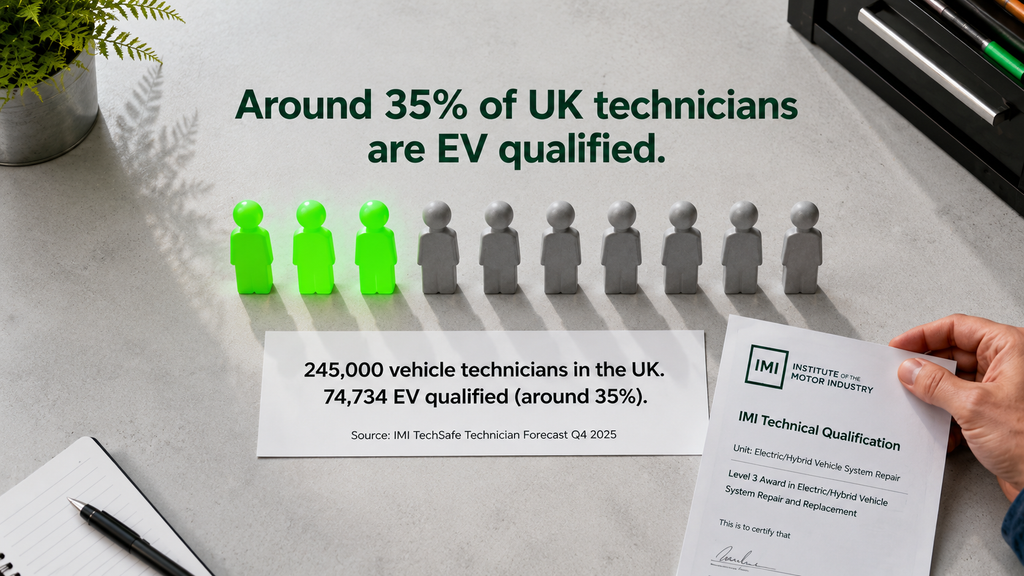
By the end of 2025, there were around 1.83 million fully electric cars on UK roads. The latest IMI TechSafe data recorded 74,734 UK technicians holding an EV qualification, representing around 35% of the UK technician workforce. Source: Zemo Partnership and IMI TechSafe Q4 2025.
2. Understanding the gap you are working with
The numbers that shape your planning decisions
Before you can plan effectively, you need to understand the scale of the challenge. By the end of 2025, around 74,734 UK technicians held an EV qualification, representing approximately 35% of the total technician workforce. While that represents genuine progress, the Institute of the Motor Industry forecasts that demand for EV-qualified technicians will continue to outpace supply significantly, with the potential shortfall exceeding 43,000 technicians by 2035 if current trends continue.
The ZEV mandate requires 33% of new car sales to be zero-emission in 2026, rising to 80% by 2030. The vehicles mandated into the market today will be arriving in independent workshops within two to four years, as they cycle out of manufacturer warranty. That is the timeline your workforce planning needs to work to.
The number of technicians gaining EV qualifications fell by nearly 13% between Q1 and Q3 2025, raising concerns that training capacity is not keeping pace with future demand. For your workshop specifically, this means the technicians you need may not be abundant or straightforward to hire in 2028 or 2030. The businesses that invest in developing their own people now will be in a substantially stronger position than those trying to recruit into a tightening candidate pool later.
3. What workforce planning actually looks like in practice

Turning the strategy into something you can act on this week
Workforce planning for an EV workshop does not require a complicated document. It requires honest answers to a small number of practical questions. How many of your current technicians hold an IMI EV qualification and at what level? What proportion of the vehicles coming through your workshop are currently electric or hybrid? What does that proportion look like in your area in two years, based on current registration trends? And what would it mean commercially for your workshop if you could not service those vehicles?
Once you have those answers, the planning becomes clearer. If your workshop currently has no EV-qualified technicians, a practical starting point is getting at least one through the IMI Level 2 qualification as soon as possible. This provides the training and competence needed for routine EV maintenance within the scope of that qualification, while higher-risk work on high-voltage systems requires additional competence and training at higher levels.
The IMI qualification pathway generally progresses from Level 2 through Level 3 towards Level 4, with each level covering a progressively higher level of EV technical responsibility. Employers should check the entry requirements of the specific qualification and ensure technicians have appropriate underlying experience and competence before enrolling. A technician working through the framework at a steady pace will realistically be ready for Level 4 work in twelve to eighteen months from starting Level 2, depending on their progression and the training provider used.
The IMI offers EV training and qualification routes at different levels, including Level 2, Level 3 and Level 4. Some Level 2 and Level 3 training can be completed through combined courses, while Level 4 is aimed at experienced technicians with prior Level 3 EV knowledge or equivalent experience. Employers should therefore plan development routes around the specific qualification requirements and capability needed for each role.
4. Build, buy or borrow: Your three options
Choosing the right approach for your workshop’s situation
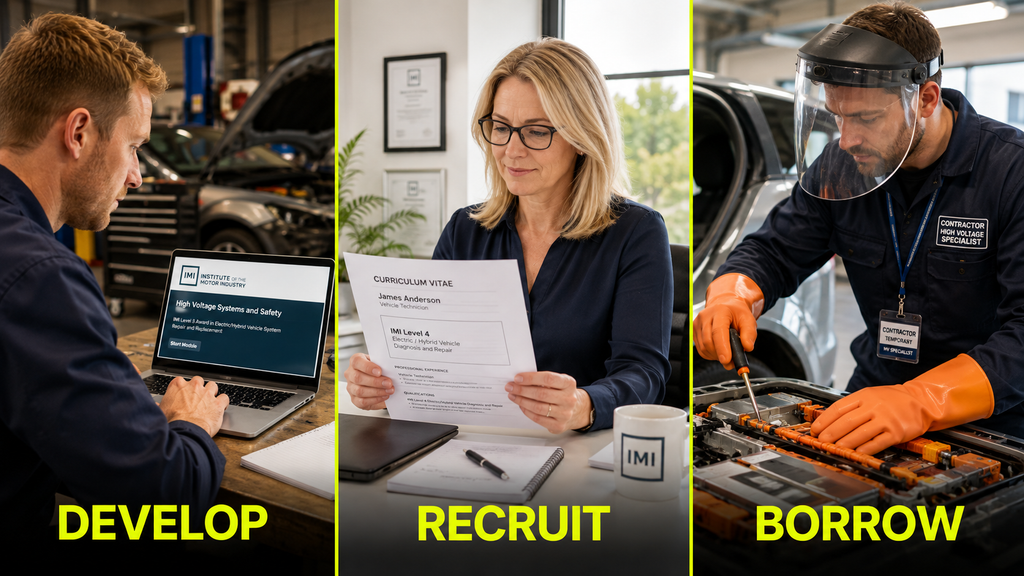
When it comes to building EV capability, most workshops have three broad options available to them. You can develop your existing team, you can recruit people who already have the skills or you can bring in temporary qualified technicians while your permanent capability develops. In practice, the best approach for most independent workshops is a combination of all three.
Developing your existing team is the most sustainable long-term strategy. Your existing technicians already know your customers, your processes and your workshop culture. Investing in their EV training builds loyalty as well as capability. Government-funded routes such as the Adult Skills Fund and Skills Bootcamps can support eligible adults and employers with training costs, including some automotive courses. Eligibility depends on factors including location, age, earnings and the specific programme, so it is worth checking what applies to your team directly with an approved training provider.
Recruiting qualified technicians is the fastest route to capability but the most competitive. With 74,734 EV-qualified technicians recorded in the latest IMI TechSafe Q4 2025 data, and demand projected to rise faster than supply, candidates with relevant EV qualifications and experience are in a strong position. IMI forecasts that demand could exceed supply by more than 43,000 technicians by 2035. Advertising for these roles therefore requires a compelling offer around salary, development and working environment.
Using temporary EV-qualified technicians can bridge the gap while your permanent hire or training programme comes through. This approach lets you take on EV work and generate revenue from it without waiting until your own team is fully qualified. It also gives your existing technicians exposure to EV work in a live environment, which accelerates their development.
5. The commercial argument for acting now
What EV capability is actually worth to your workshop
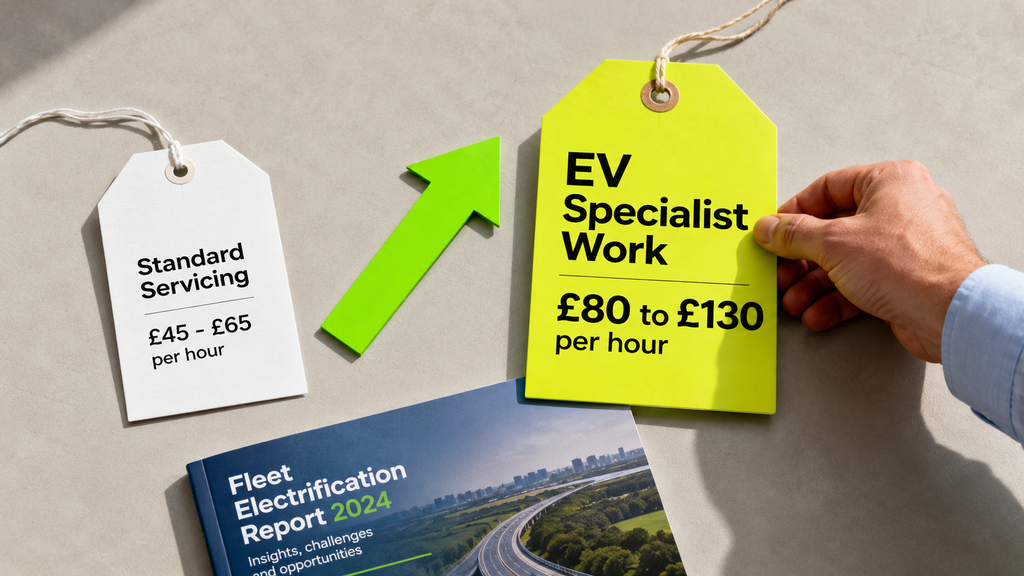
Workforce planning can feel like an abstract exercise until you put a number on what inaction costs. Some UK garages are charging around £80 to £130 per hour for EV work, reflecting the specialist training, diagnostic equipment and safety infrastructure involved. A workshop capable of carrying out EV diagnostic and repair work can access specialist work that may command higher labour rates than routine servicing, although EVs also generate less routine aftersales work overall.
Research from McKinsey suggests that EVs can generate up to 40% less aftermarket spending than similarly aged ICE vehicles. Fewer oil changes, no clutch replacements, no exhaust work and no conventional transmission servicing all reduce the natural flow of work through a workshop. The response to that challenge is not to avoid EV work. It is to position your workshop to carry out the EV-specific work that does exist and that commands a premium.
Fleet operators are also accelerating the pressure on workshops. Electrified orders were reaching around 85% for some major fleet providers in early 2026. Those vehicles will require servicing and repair. The workshops equipped to service them will be better positioned to compete for fleet and leasing work, while those without the necessary capability risk being excluded from some contracts.
6. Retaining the people you develop
Training your team is only half the investment
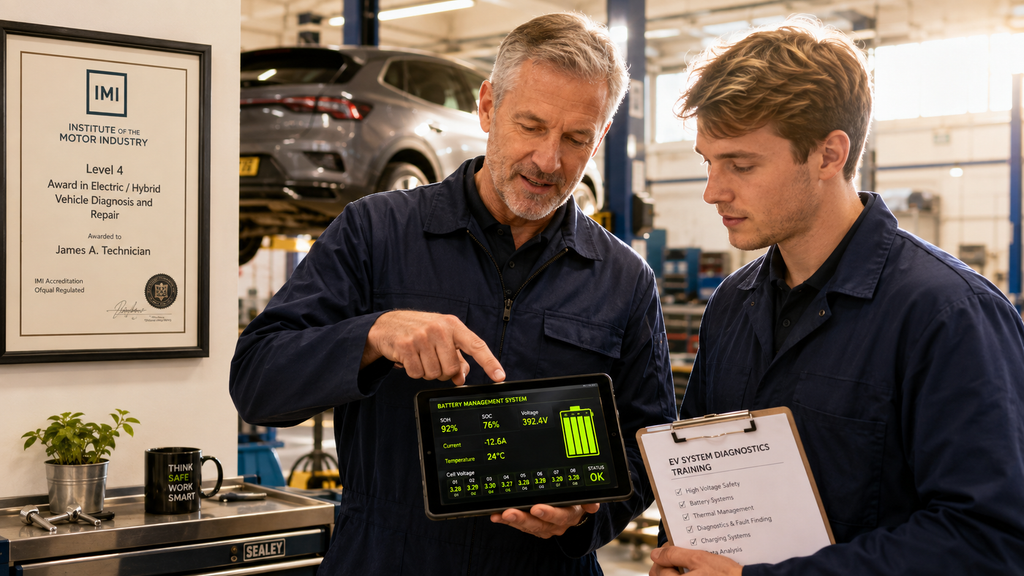
One of the most common concerns workshop owners raise about investing in EV training is the risk that a newly qualified technician will take their qualification and leave for a higher-paying role elsewhere. That risk is real and it is worth taking seriously. But the answer to it is not to avoid training. It is to create the conditions that make staying the more attractive option.
Technicians are more likely to stay when employers invest in their development, recognise their skills in their pay and provide the tools and working environment needed to do the job well. A technician who has been supported through multiple IMI qualification levels by the same employer has a strong reason for loyalty that goes beyond salary alone.
Workforce planning that includes retention is more effective than planning that only covers recruitment and training. Tracking your technician retention rate quarterly, reviewing what your best performers value and having honest conversations about career progression all cost very little and contribute meaningfully to keeping the people you have invested in.
7. Planning for the workshop you will need, not the one you have
A forward-looking workforce strategy starts with an honest assessment today
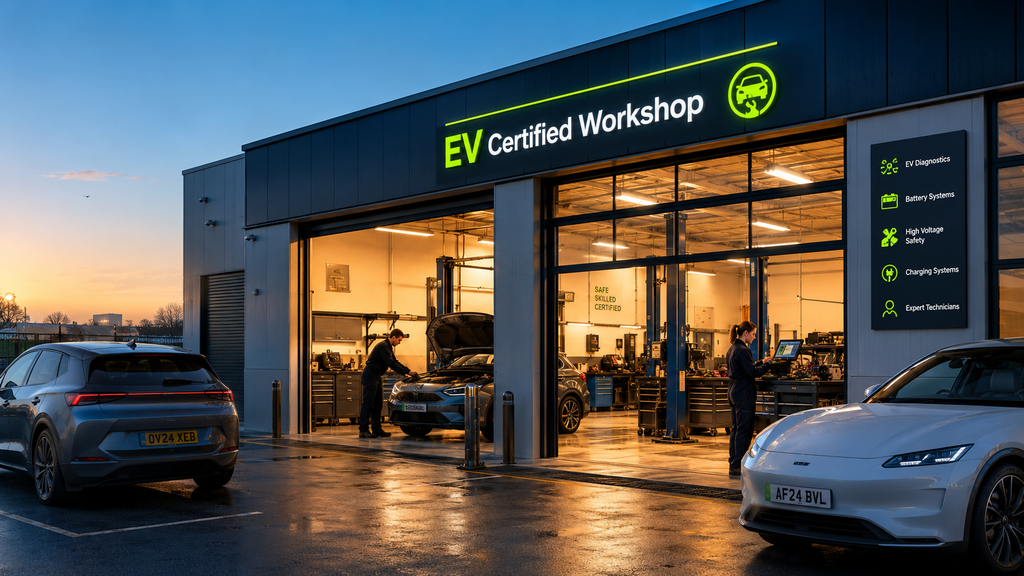
The most useful thing you can do this week is conduct a simple skills audit of your current team. List every technician, their current IMI qualifications and their years of experience with conventional and electrified vehicles. Map that against the realistic composition of vehicles likely to come through your workshop in 2027 and 2029. The gap between those two pictures is your workforce planning challenge.
From there, the priorities become concrete. Which technicians are best placed to progress through the IMI framework? Which roles should you be planning to recruit for in the next six to twelve months? What training investments need to be budgeted for this financial year to have the right capability in place eighteen months from now?
The businesses thinking seriously about EV workforce planning in 2026 are not doing so because it is easy. They are doing so because the cost of not planning is becoming visible. Turning away EV customers, losing fleet accounts to better-equipped competitors and scrambling to hire from an increasingly thin candidate pool are all predictable outcomes for workshops that wait. The window for getting ahead of this is still open. It will not stay open indefinitely.
Sources: IMI TechSafe data, Electric & Hybrid Vehicle Technology International June 2026, Remit Training 2025, Williamson & Croft May 2026, Meenz June 2026, SMMT EV registration data 2025, cargarages.co.uk Labour Rate Guide 2026, AKA Recruitment/FleetWorld 2026. All figures verified at time of publication.