How independent garages can hire multi-skilled, EV-qualified vehicle technicians in the UK
1. The UK automotive workforce is changing
And the hiring conversation is changing with it
Independent garages are working with a more electrically complex vehicle mix, while petrol and diesel remain part of the workshop workload. SMMT registration data separates battery-electric vehicles (BEVs), plug-in hybrids (PHEVs) and non-plug-in hybrids (HEVs), rather than treating them as one category. In August 2026, BEVs represented 29.8% of new UK car registrations, while HEVs accounted for 12.7% and PHEVs 14.5%.
Those figures describe new registrations, not the whole car parc. They show why a garage recruiting today may need to understand more than conventional engine and chassis work. The practical question is which electric and hybrid work the business can accept safely and profitably alongside its existing ICE workload.
As the vehicle mix changes, the meaning of “EV technician” becomes more important. The phrase can describe different levels of training and experience.
2. What “EV-qualified technician” actually means
The job title is broader than it first appears
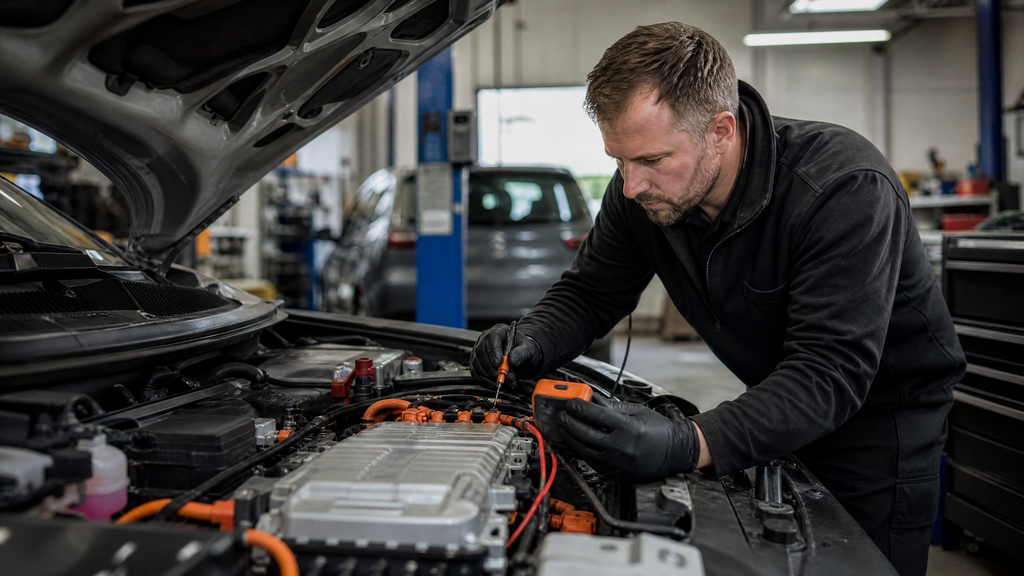
“EV-qualified” is not a complete job description. It may refer to a technician who has completed a routine-maintenance award, someone qualified to remove and replace high-voltage components or a more advanced technician trained in diagnosis, testing and repair. The level and scope must be checked rather than inferred from the phrase.
The current IMI Level 2 Technical Specialist award covers high-voltage hazards, safe working, and the isolation and reinstatement needed for routine maintenance. IMI explicitly says that it does not certify a technician to work directly on a vehicle’s high-voltage system.
The current Level 3 Technical Specialist award is broader. It covers diagnostic, testing and repair activities and gives successful learners the knowledge and skills to remove and replace electric/hybrid high-voltage components. IMI describes it as complementing existing Level 3 vehicle-maintenance knowledge and experience.
Level 4 goes beyond routine maintenance and component replacement, covering advanced diagnosis, testing and repair of high-voltage systems. It includes working on live high-voltage electrical components and, for appropriately trained technicians, can include work on high-voltage EV battery systems. The assessment combines practical, oral and written elements.
The qualification level should therefore be matched to the actual work. Routine-maintenance training is not authority for every form of EV repair.
3. Why EV qualifications matter, but should not end the conversation
The difference between an assessed qualification and workshop competence
IMI EV qualifications provide a recognised benchmark of knowledge and assessed skills. The IMI describes them as vocational qualifications intended to demonstrate knowledge, skills and competence to the required automotive standard.
A qualification shows what someone has learned and been assessed on. It does not show how recently they have worked on an EV, which systems they have encountered or whether they can apply manufacturer information and diagnostic equipment confidently. Nor does it prove competence for every high-voltage task.
TechSafe is professional recognition within the IMI Professional Register, based on an eligible qualification or accreditation, membership and continuing professional development. It is evidence of recognised safe working and professional commitment, not a record of battery repairs or a substitute for checking experience.
Follow the qualification check with questions about actual EV and hybrid work, vehicle systems encountered, level of independence and supervision. The certificate opens the conversation; the answers reveal what sits behind it.
4. Practical high-voltage experience is increasingly valuable
What regular EV work develops in a technician
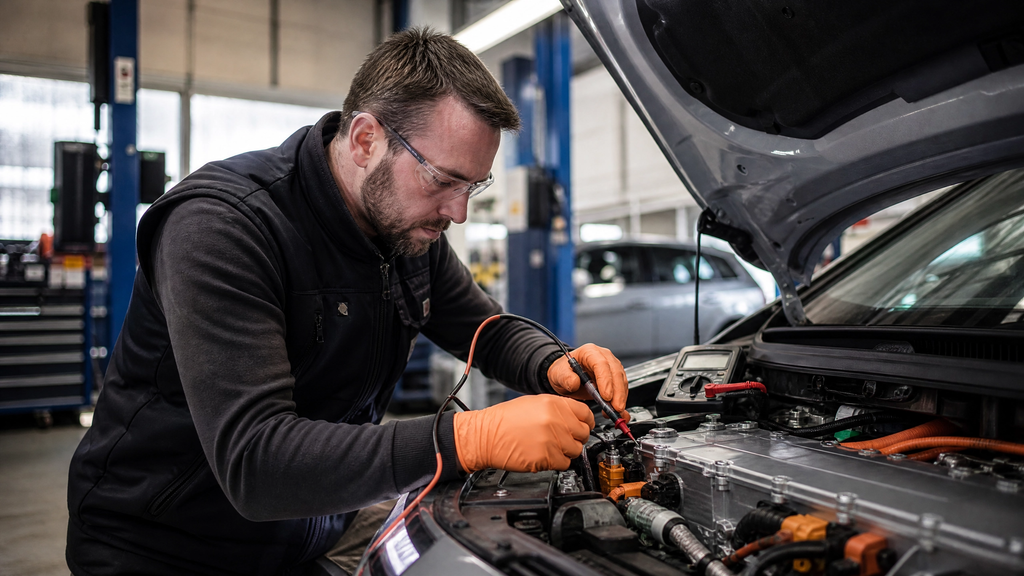
Holding an EV qualification is different from applying it regularly in a live workshop. Practical experience develops through real vehicles, faults and vehicle-specific procedures.
HSE states that electric and hybrid vehicles may require wider skills, specialist tools and equipment. Competence depends on the task, from lower-risk activities to work on high-voltage systems.
A garage mainly carrying out servicing, tyres, brakes and suspension may need technicians who recognise EV hazards and follow workplace controls. High-voltage diagnosis or battery repairs require deeper competence, equipment and supervision.
Ask candidates about the last electric or hybrid vehicles they worked on, the systems involved and their responsibility. Their explanation of competence limits and escalation points may be more revealing than a certificate presented as permission to do everything.
5. EV battery competence is part of the wider skills conversation
Beyond basic EV awareness and routine maintenance
EV capability is not just a matter of recognising orange cables. Depending on the customer base, a technician may need to interpret vehicle information, understand battery and power-electronics symptoms, use diagnostic equipment and distinguish a control-system fault from a mechanical issue.
The UK occupational standard for non-high-voltage EV operations covers safe work on, near or with an electrically propelled vehicle, but does not deem someone competent to maintain, service or repair its high-voltage systems.
For a higher-level role, ask about diagnostic platforms, manufacturer portals, insulation or isolation faults and battery-management systems. Ask the candidate to distinguish an observed symptom from a confirmed cause. The aim is to establish whether experience matches the intended work.
A higher qualification and substantial battery experience are not automatically the same thing.
6. Why multi-skilled technicians matter to independent workshops
Versatility is a workshop asset, not a compromise
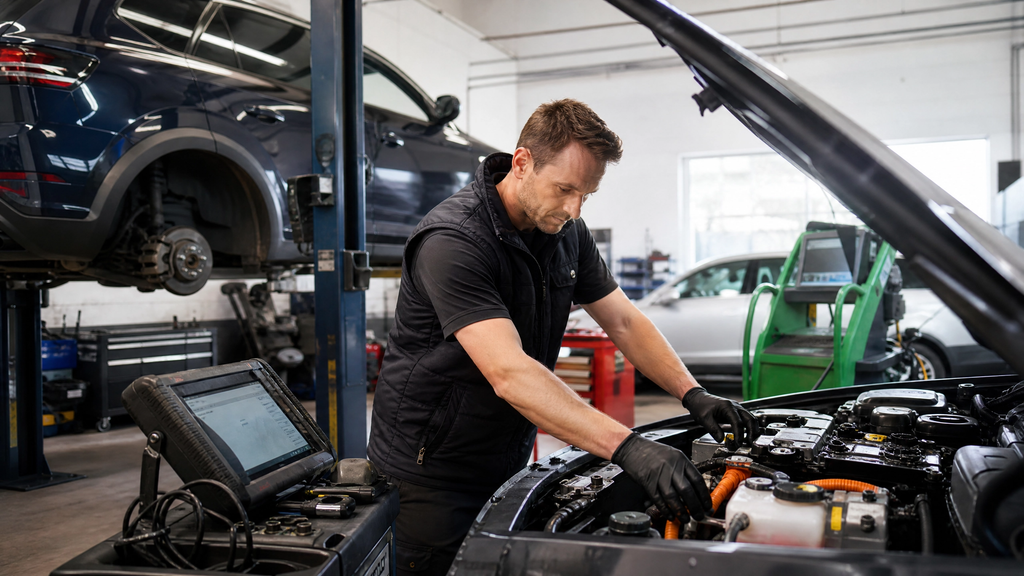
A genuinely multi-skilled technician can contribute across ICE servicing and diagnosis, hybrid systems and EV work within their competence. That breadth is useful in an independent workshop with a mixed workload.
The phrase should not be used loosely. An ICE technician with EV awareness or Level 2 routine-maintenance capability is not automatically an advanced EV diagnostician. A high-voltage technician may still need evidence of current competence in engines, emissions, brakes, steering, suspension and general fault finding.
The right appointment matches the whole workload: a vehicle technician with an ICE foundation and EV capability added at a defined level, able to contribute to current work while taking on appropriate electric and hybrid jobs.
7. Recruitment should start with the capability the workshop actually needs
Clarity before advertising saves time
Start with the work, not the label. Define the EV and hybrid jobs the garage will perform, refer elsewhere and accept. Decide whether the role includes routine maintenance, isolation and reinstatement, component replacement, advanced diagnosis or live-system work.
HSE stresses that manufacturer-specific information matters because vehicle designs differ. Consider the technician’s qualification alongside the information, tools, work area, supervision and training the garage can provide.
Map the existing needs too. If most vehicles are petrol or diesel, general diagnostics and repair skills may matter as much as EV training. “EV qualified” alone leaves the requirement unclear.
8. Assess the candidate’s complete workshop capability
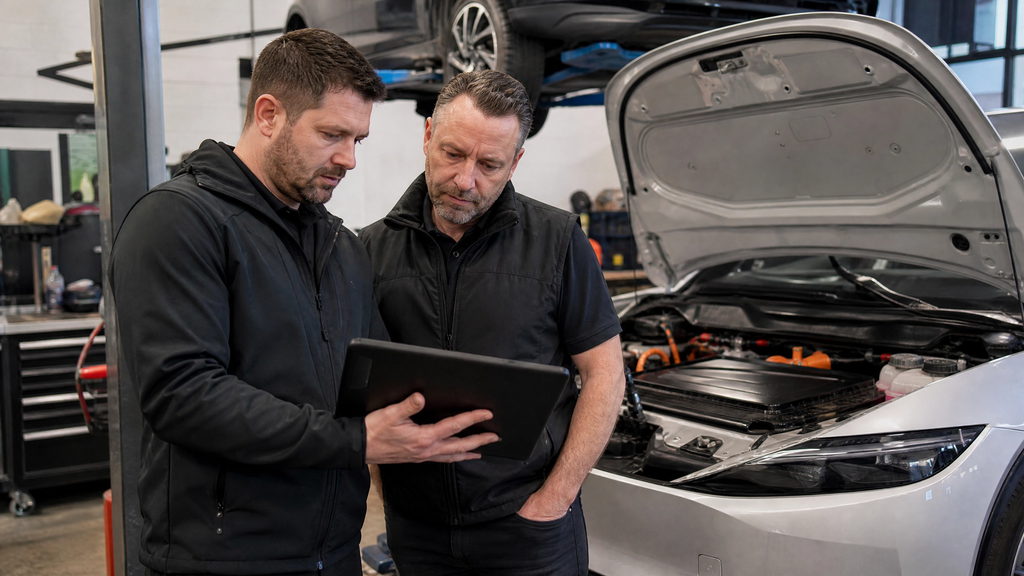
Qualification, experience and judgement need to be considered together
Check the exact qualification title, awarding organisation, date and level. Confirm current TechSafe recognition, but keep it separate from the qualification and practical experience. Ask what work the candidate was authorised to undertake and what was outside their role.
Explore the evidence. Which makes and models have they seen? Was their experience with BEVs, HEVs, PHEVs or all three? Have they carried out maintenance, component replacement, diagnosis or testing? What equipment did they use and when did they stop or escalate?
For safety-critical work, ask how they follow the employer’s safe system of work and manufacturer instructions. HSE says high-voltage systems should be isolated and proven dead before work, using suitable tools and test equipment and that live work should only be considered where there is no other way and it is reasonable and safe. The interview should therefore test judgement and procedural discipline, not bravado.
Finally, assess workshop fit. Can the technician diagnose an ICE fault, explain a repair and identify when supervised vehicle-specific training is needed? That helps distinguish a qualification holder from someone who can contribute reliably.
9. Qualifications plus experience plus capability
A framework worth returning to with every EV hire
IMI’s July 2025 forecast recorded 66,788 qualified UK technicians and projected a 25,435 shortfall by 2035. These are projections, not certainties, based on forecast assumptions. Garages should plan.
The technicians who stand out will combine a recognised qualification with real-world experience and wider skills across ICE, hybrid and appropriate EV work.
Qualification. Practical experience. Wider workshop capability. Together, these give an independent garage a sounder basis for hiring than a job title alone, while allowing EV capability to develop in stages.
Sources: IMI EV TechSafe Technician Forecast July 2025, SMMT Electric Vehicle Data, IMI EV qualification pages, IMI TechSafe recognition, HSE electric and hybrid vehicle guidance, and UK National Occupational Standard IMIEV01. IMI projections are based on forecast assumptions and should be treated as indicative rather than certain. All figures verified at time of publication.