Your CV gets you the interview, but can you explain your technical experience clearly?
1. Your CV has got you through the door
The interview is where the detail matters
Imagine you are a workshop manager reviewing a technician’s CV. The candidate has an EV qualification and relevant workshop experience, so you invite them to interview. Their application has given you enough reason to learn more, but it has not yet told you everything they can do.
If you are the candidate, an interview invitation is a positive step. Your CV has achieved one of its main purposes: showing that your background is relevant to the role.
For an EV-qualified vehicle technician, qualifications and previous job titles can attract attention. Employers also need to understand what you have actually done, how frequently you have done it and what level of support you needed.
Your CV provides the overview. The interview provides the depth. The aim is to explain the practical experience behind those two pages clearly and honestly.
2. Keep your CV concise: Two pages maximum
Give employers a relevant overview
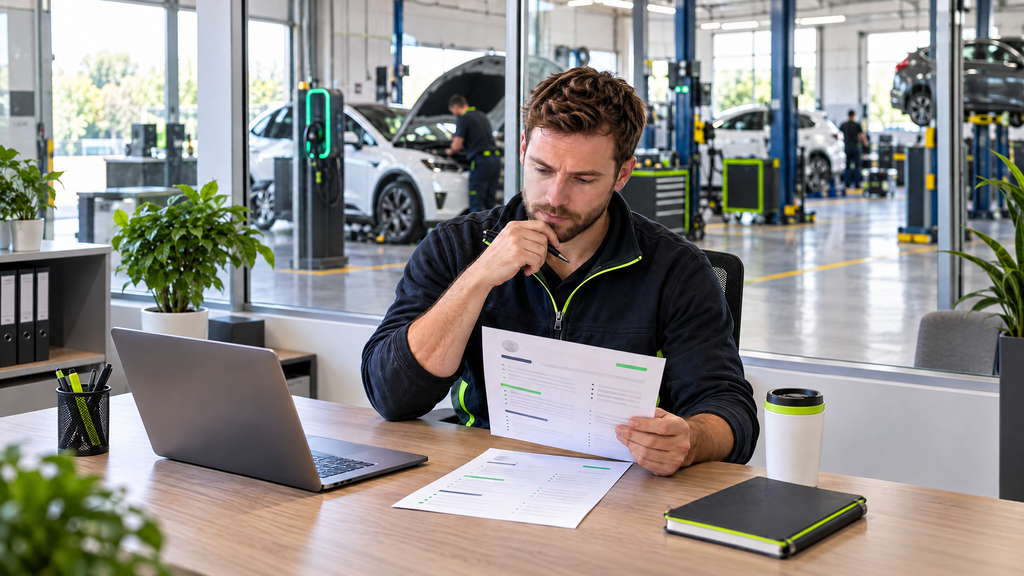
More technical experience does not require a four or five-page CV. Aim for no more than two pages and prioritise information relevant to the position.
Include your EV qualification level, relevant technical training, IMI TechSafe registration status where applicable, diagnostic experience, high-voltage exposure, vehicle types and workshop responsibilities.
Briefly indicate whether important tasks were completed independently or under supervision. For example, “Carried out high-voltage diagnostics under a Master Technician’s supervision” provides useful context without turning your CV into a detailed job diary.
If you are listed on the IMI TechSafe Register, state that accurately rather than assuming the employer will check. Do not imply registration if you are not listed.
You do not need to document every task you have completed. Select experience relevant to the role and prepare to explain it in greater detail during the interview. A concise CV makes it easier for employers to identify the areas they want to explore.
3. Your qualification matters, but explain what sits behind it
Training is only part of the picture
Be prepared to explain which EV qualification you hold, when you achieved it and whether you have completed relevant manufacturer-specific training. Clarify your IMI TechSafe registration status where applicable, then describe the practical exposure you have gained since qualifying.
Two technicians can hold the same qualification but have different levels of experience. One might encounter electrified vehicles occasionally, whilst another works on them regularly. Their qualifications may be similar, but their practical exposure is not necessarily equivalent.
The IMI offers Level 2 and Level 3 electric/hybrid vehicle qualifications, which some training providers deliver as a combined course. Level 4 provides more advanced training, with entry requirements depending on the qualification and training provider. When describing your qualifications, be precise about the level you have successfully completed.
The IMI reported that 74,734 technicians held an EV qualification at the end of Q4 2025. Its forecast also projected a shortfall of more than 43,000 technicians by 2035 if current trends continue. These figures indicate the importance of EV skills across the industry, but they cannot establish an individual candidate’s practical competence.
Your interview examples help explain what your qualification means in practice.
4. Be specific about your hands-on high-voltage experience
Explain what you personally did
“EV qualified” and “experienced with electric vehicles” are useful starting points, but neither phrase explains your actual involvement.
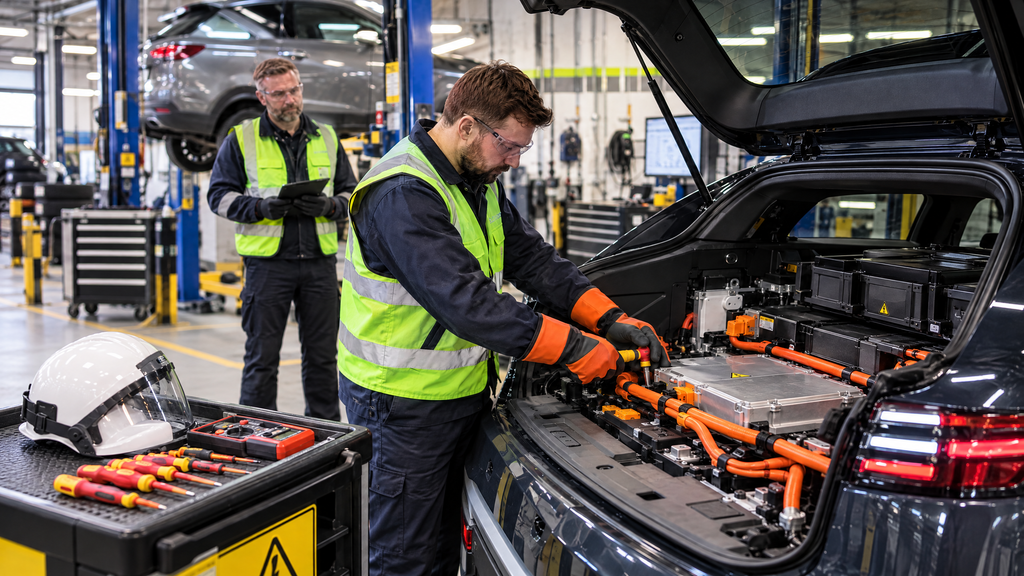
Prepare to discuss relevant tasks you have genuinely undertaken, such as safe isolation and reinstatement, diagnostics, fault-finding, battery-system work or testing and replacing high-voltage components.
The distinction between observing a task, assisting another technician and carrying out the work yourself matters. Explain which best describes your experience. If you completed a task yourself, clarify whether you worked independently or under supervision. Performing one part of a repair does not automatically mean you were responsible for the entire job.
Frequency matters too. A technician who has worked on a few EVs will have different practical exposure from someone who regularly handles EV jobs. Explain how often you have performed the work and whether that experience is recent.
Do not exaggerate your involvement to make an answer sound stronger. Do not undersell genuine experience by giving vague answers either. Describe the task, your contribution and the support available.
The employer should finish your answer understanding what you did, how often you did it and the level of responsibility you held.
5. Which manufacturers and vehicles have you actually worked on?
Put your experience in context
Saying “I have worked on electric vehicles” leaves important questions unanswered. Have you mainly worked on one manufacturer’s vehicles in a franchised dealership or have you gained experience across several manufacturers in an independent workshop? Where relevant, identify the models you have worked on.
Be clear about the type of vehicle as well. HEVs are hybrid electric vehicles, PHEVs are plug-in hybrid electric vehicles and BEVs are battery electric vehicles. Experience with one type should not automatically be presented as extensive experience with another.
Explain your internal combustion engine background if you are applying for a role involving a mixed workload.
According to SMMT Motorparc 2025 data, 1,797,809 battery electric cars were in use in the UK at the end of 2025. The average car age was 9.7 years and 45.7% of cars were more than ten years old. This illustrates why workshops may need to support newer electric models alongside older vehicles.
Connect each manufacturer and vehicle type to the work you actually performed. A list of brands alone does not explain your technical capability.
6. Explain what you actually did, not just your job title
Use a genuine example
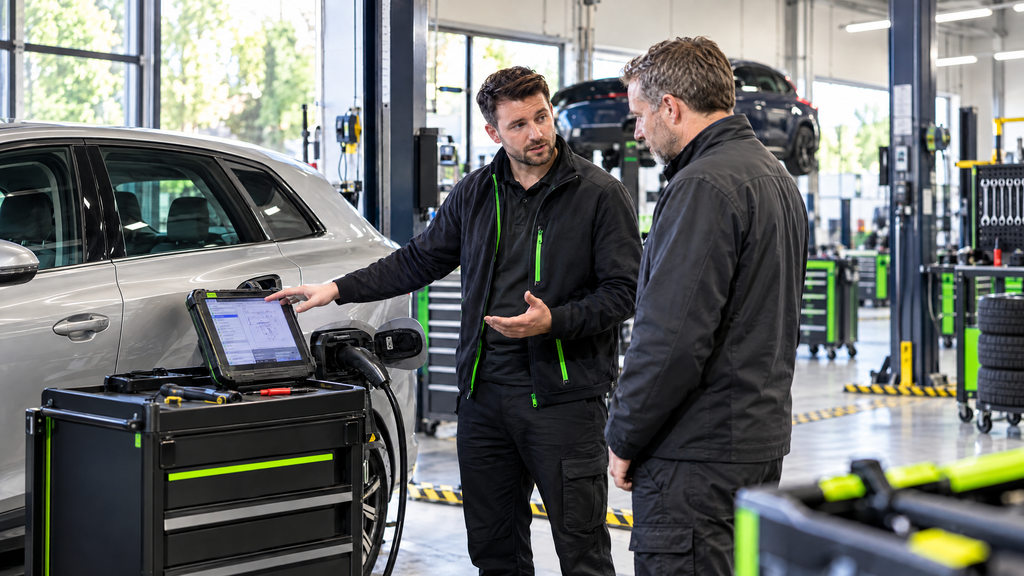
Two candidates can both carry the title “Vehicle Technician” on their CV whilst having substantially different responsibilities. Prepare a real example that explains the problem, your diagnostic approach, your involvement, the work carried out and the outcome.
Instead of saying only “I carried out EV diagnostics”, explain the symptoms reported and how you approached the investigation. Identify the relevant vehicle systems where you can do so accurately, then distinguish your contribution from the work completed by colleagues.
If a Master Technician guided your diagnosis or checked your work, say so. If you identified a fault but escalated the repair, explain that too. There is no need to imply that you completed the entire job independently.
You do not need to reveal confidential customer information or remember every technical value from a past repair. Focus on your reasoning, the decisions you made and how the issue progressed.
A clear example gives an interviewer more useful evidence of your technical judgement than a repeated list of qualifications and responsibilities.
7. Explain the workshop and team around you
Your working environment provides context
Technical experience does not happen in isolation. Employers may need to understand the workshop where you gained it. How large was the team? How many technicians regularly handled EV work? Were you one of a small number allocated high-voltage jobs, or did you work alongside several experienced EV technicians?
Explain who you reported to and how difficult cases were handled. Perhaps you completed initial checks before escalating a complex fault to a Senior or Master Technician. Perhaps you assisted colleagues on some jobs but took responsibility for defined tasks on others.
For example, being one of two technicians regularly carrying out EV work in a 15-person workshop helps explain your working environment. It does not prove a particular level of competence, but it gives the interviewer useful context.
Avoid treating the number of qualified colleagues as a substitute for your own experience. Explain the support available and the work you were trusted to perform.
8. Be clear about your level of responsibility
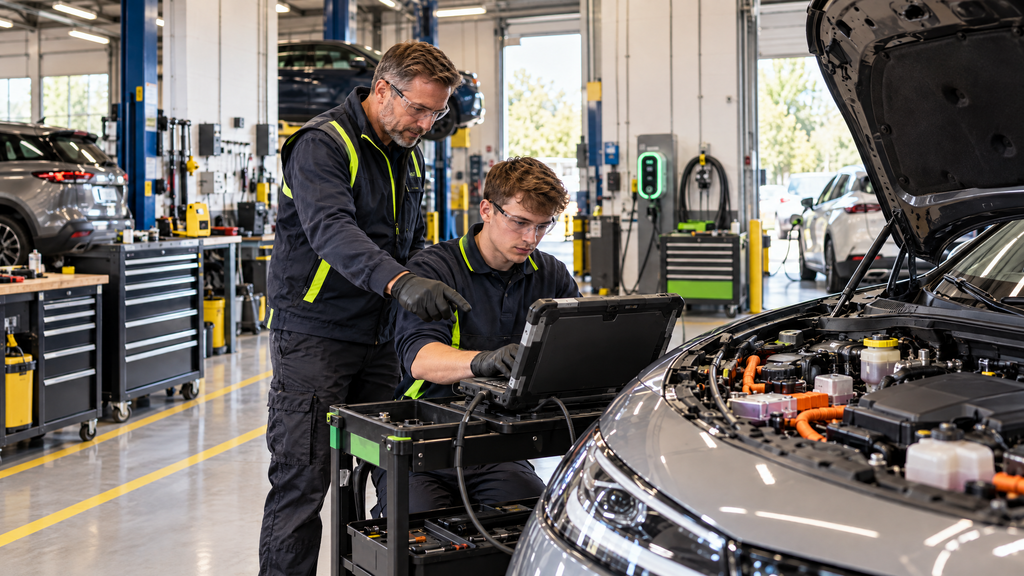
Independence is specific, not a blanket label
If you describe yourself as working independently, be ready to explain what that meant in practice. Were EV jobs allocated directly to you? Which tasks could you complete without supervision? Which required another technician’s involvement or approval?
Explain whether you diagnosed faults before escalating complex cases or mainly assisted with work planned by someone else. If you supervised or supported other technicians, describe that responsibility accurately too.
Presenting every task as independent when that was not the reality serves little purpose. Needing support with a complex diagnosis does not diminish the value of the work you completed correctly.
Good technicians recognise when a job falls outside their current experience and seek appropriate assistance. Explaining when you made that decision demonstrates professional judgement.
Employers need an accurate picture of what you can do now and where further development may be useful. Describe your independence in relation to specific tasks rather than presenting it as a blanket claim.
9. Technical detail matters, but so does communication
Keep your answers focused
A technician may be capable in the workshop yet struggle to explain that capability under interview pressure. Your answer does not need to be elaborate. Identify the manufacturer and vehicle type, explain the problem, describe your responsibility and outline the work and outcome.
Prepare a few examples before the interview and practise explaining them aloud. Give enough detail to make your role clear, then allow the interviewer to ask follow-up questions.
Use technical terminology when it adds precision, but do not hide behind jargon. Explain unfamiliar abbreviations when necessary and avoid claiming certainty when you are unsure.
Clear communication helps an interviewer distinguish your own decisions from the work completed by the wider team. It also makes it easier to explore your experience without losing the main point in unnecessary detail.
10. Employers: Look beyond qualifications and job titles
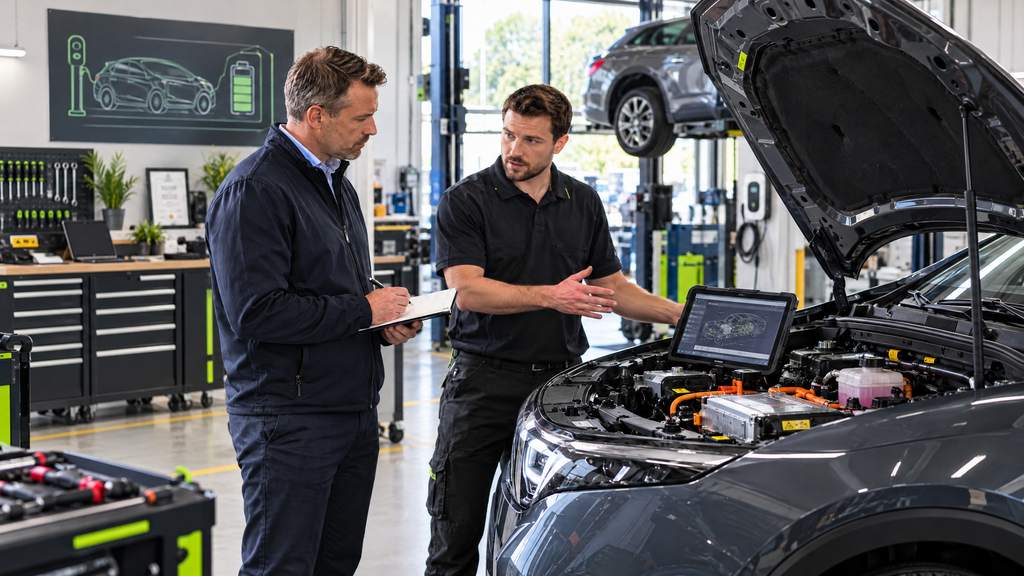
Ask about practical evidence
Qualifications, TechSafe registration and job titles provide useful starting points, but they do not reveal the full depth of a candidate’s practical experience.
Ask which manufacturers and vehicle types the candidate has worked on, what high-voltage tasks they personally performed and how frequently they performed them. Explore whether the work was independent or supervised, what support was available and when difficult cases were escalated.
These questions help establish the relationship between formal training, practical exposure and current capability without encouraging candidates to overstate their experience.
11. Bring those two pages to life
Make the interview count
Your CV should remain concise, relevant and ideally no more than two pages. Briefly stating whether key work was completed independently or under supervision gives employers useful context without filling the document with unnecessary detail.
Before the interview, prepare to explain your qualifications and TechSafe status, the manufacturers and vehicle types you have worked on, your hybrid and BEV exposure and the high-voltage or diagnostic tasks you have genuinely performed. Think about the team around you, the responsibilities you held and the situations where you needed support.
The aim is not to sound as though you have done everything. It is to help the employer understand your actual experience, your judgement and the areas where you are ready to contribute.
Your CV gets you the interview. Your ability to explain the experience behind it helps the employer understand the technician they are considering hiring.
Sources
IMI, EV TechSafe Technician Forecast: Q4 2025, published 13 May 2026 and updated 10 June 2026. SMMT, One in 22 vehicles now zero emission as UK fleet reaches record high, published 24 April 2026.