Hire certified EV technicians now to capture the growing EV business
Introduction: Future-proofing your service model
The UK is undergoing a major, irreversible shift in mobility. With government targets aiming for all new car sales to be zero emission by 2035, electric vehicles (EVs) are no longer a niche market or a distant concept, they are rapidly becoming mainstream. For independent garages, dealerships, service centres, and strategic EV maintenance providers across the country, this represents both an immense challenge and an unparalleled commercial opportunity. You now face a critical, binary choice: adapt swiftly to the EV revolution and secure your long-term success, or risk losing market share, customers, and revenue as the older internal combustion engine (ICE) maintenance base begins to inevitably shrink.
Central to this essential adaptation is the ability to hire, train, and retain certified EV technicians. These highly specialised professionals bring with them the critical knowledge and hands-on expertise required to safely and effectively service, maintain, and repair the complex electric and hybrid vehicles filling our roads. The uncomfortable truth is that the demand for these certified EV technicians is already growing faster than the existing supply, creating a skills gap that your independent organisation can no longer afford to ignore.
By investing in certified EV talent now, you are not simply meeting a rising operational requirement, you are making a profound statement of intent. You position your business to capture a significantly larger share of the lucrative, growing EV service market, drastically reduce vehicle downtime for your customers, and build an unshakeable reputation as a proactive, safe, and professional service provider. Throughout this article, we’ll explore precisely why hiring EV technicians is no longer optional, what critical qualifications truly matter in this high-voltage domain, and how your business can strategically grow its EV capabilities today.
1. The growing EV market and your opportunity
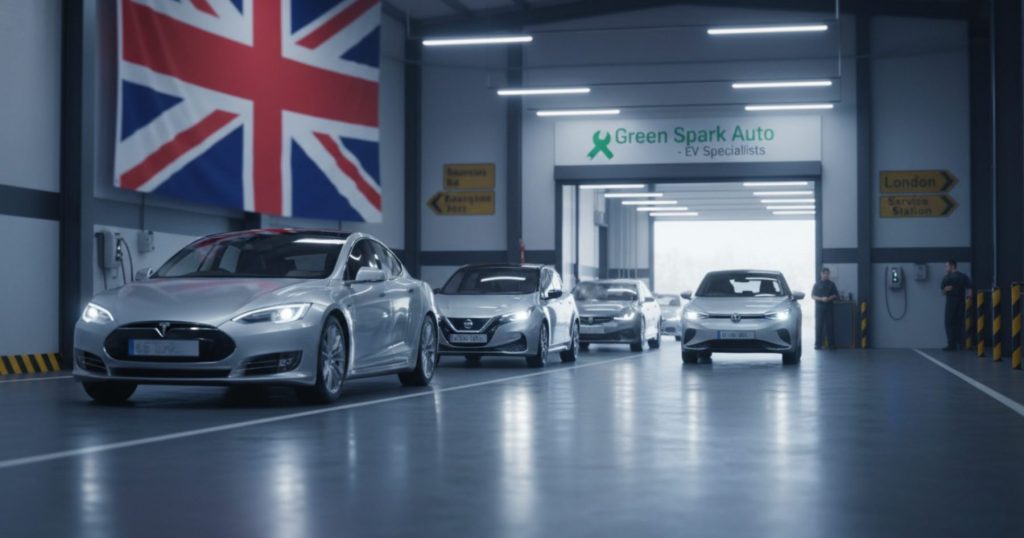
If you are waiting for clear evidence that the electric wave is here, look no further than the UK’s latest vehicle registration data and policy landscape. The rapid adoption of EVs is a high certainty trend, and it is creating a vast, underserved service market right on your doorstep. Your ability to service this new generation of vehicles will directly determine your financial health over the next decade.
Rapid adoption of EVs: The numbers you can’t ignore
The UK’s commitment to phasing out the sale of new petrol and diesel cars is a monumental force driving EV uptake. This transition is not subtle, it is happening at a pace. While year-to-year statistics fluctuate, the overall trajectory is clear: electric vehicles consistently account for over 20% of new car registrations. Industry forecasts suggest that by 2030, nearly 80% of new vehicle sales must be Zero Emission Vehicles (ZEVs) due to the new ZEV Mandate, which imposes crippling fines on manufacturers who fail to meet strict sales quotas. This legislative pressure guarantees a continuous, massive supply of EVs entering the secondhand market and, critically, entering your service bays.
This growth is your commercial opportunity. Every EV sold is a future maintenance contract, a new diagnostic job, and a potential repeat customer for your business. The current growth rates mean that within five years, a substantial portion of the cars on UK roads will require specialised EV service and repair, and they cannot, must not, be serviced by unqualified staff.
Customer expectations: Safety, speed, and certification
The modern EV owner is fundamentally different from the traditional ICE vehicle driver. They are typically technology literate and highly conscious of the specialisation required for their vehicle. Your customers expect certified service, rapid and accurate diagnostics, and, most importantly, the safe handling of powerful, high-voltage battery systems.
If an EV owner drives into your garage and realises your staff lack the appropriate IMI qualifications or specialised high-voltage tools, they will instantly lose confidence. They will seek out a competitor who has demonstrably invested in certified talent. For an EV owner, competence equals safety, and safety is non-negotiable when dealing with power systems carrying hundreds of volts. You must not only be competent but be able to prove it with recognised, current certifications.
Revenue potential: Capitalising on an underserved market
Right now, the EV service market is disproportionately dominated by franchised dealerships and OEM service networks. This presents a massive, immediate revenue opportunity for agile independent businesses. Why? Because OEM service can be expensive, inconveniently located, and subject to long wait times.
By hiring certified EV technicians, you can step in and offer a local, high-quality, price-competitive alternative. This allows you to capture fleet maintenance contracts (driven by low Benefit in Kind tax), secure lucrative diagnostic jobs that ICE-only businesses must turn away, and utilise specialised knowledge to service the complex battery and software systems. This is new, high-value revenue that will be unavailable to your competitors who choose to delay.
First mover advantage: Gaining a competitive edge
The first mover advantage in this skills race is significant. Service centres that hire certified EV technicians early will naturally attract the first wave of demanding EV owners. They will become the known, trusted entity in their local area for electric vehicle expertise. This initial reputation will attract not just private owners, but local fleet operators, and even potentially partner with new EV service companies that require maintenance teams for their expanding infrastructure. Securing this early market perception and expertise is far easier and less costly than trying to play catch-up years down the line when the skills shortage has become truly acute. The time to secure your position is now, before the skills pool dries up.
2. Why certified EV technicians are essential
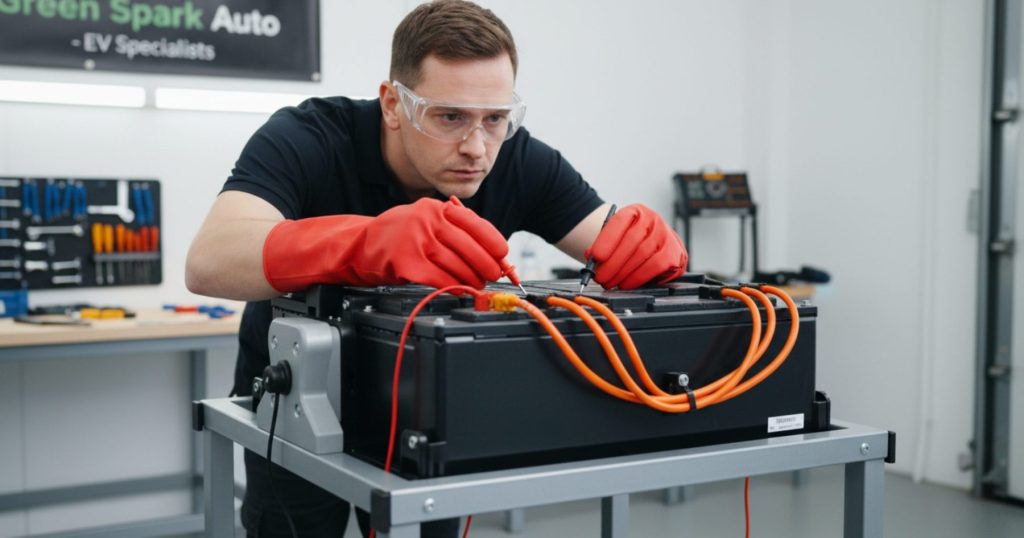
You might have highly skilled mechanics who have worked on ICE vehicles for decades. That experience is valuable, but it is fundamentally insufficient for the challenges posed by electric vehicles. The transition from mechanical reliance to complex electrical and software integration is precisely why specialised, certified EV technicians are not just a nice-to-have, but an absolute operational necessity.
The critical skills gap in the UK
The skills gap for mid to senior-level EV technicians in the UK is becoming a chasm. While government and industry bodies are pushing training, the sheer volume of vehicles arriving on the roads is outpacing the number of qualified people. Independent businesses often find themselves in a desperate scramble to find qualified talent, frequently competing directly with OEM networks and large organisations with deep pockets.
Your future depends on addressing this gap. Unqualified staff cannot service these vehicles, meaning you must turn away high-value work. This scarcity dynamic means that waiting another year only makes hiring certified EV technicians harder and significantly more expensive. You need a strategy to acquire these skills now, or you risk being left behind in the race for talent.
Safety and compliance: Non-negotiable requirements
Working on an EV is not just a matter of mechanics, it is a matter of life and death if proper safety protocols are not followed. The high-voltage systems (often operating between 300V and 800V) in electric cars pose severe electrocution and fire risks.
Certified EV technicians are indispensable because they possess:
- Knowledge of high voltage systems: They understand how to safely isolate the battery, check for potential faults, and manage the high voltage lines, adhering to strict safety procedures that protect both themselves and your premises.
- OEM-specific training: They understand proprietary diagnostic software and repair methods specific to brands like Tesla, JLR, VW, and Nissan, knowledge traditional mechanics do not have.
- IMI certifications: The Institute of the Motor Industry (IMI) certifications (Level 2 to Level 4) are the industry standard proof that a technician can work safely and competently on hybrid and pure electric vehicles.
Failure to hire certified staff puts your business at severe risk of catastrophic accident, crippling insurance claims, and irreparable damage to vehicles under warranty. Your compliance and safety record depend on this expertise.
Technical expertise: Diagnosis beyond the spanner
The complexity of an EV lies in its integrated systems. An EV technician is less of a mechanic and more of a specialised systems engineer. They must be able to do far more than change oil and filters:
- Battery system diagnosis: They can accurately test battery State of Health (SoH), diagnose cell-level faults, and determine if a battery pack needs repair or replacement, a skill that requires specific software and electrical know-how.
- Hybrid repairs: They understand the delicate balance between the high-voltage drive train and the low-voltage auxiliary systems in complex hybrid vehicles.
- Software diagnostics: Modern EVs are computers on wheels. Technicians need proficiency in advanced diagnostic software, code reading, and software updates, which are often the first step in any repair process.
If you want to service these vehicles, you need people with these specialised, electrical and computational skills. A traditional mechanic simply cannot bridge this gap without extensive, certified training.
Quality and customer trust: Securing your reputation
Hiring certified EV technicians acts as a powerful quality assurance measure for your customers. Their certification reduces the risk of expensive mistakes and ensures that repairs are carried out to the manufacturer’s standards. This, in turn, increases customer confidence in your business.
When a customer sees an IMI-certified plaque on your wall or a certified technician working on their vehicle, they know you have invested in their safety and the long-term health of their expensive EV. This translates directly into better reviews, stronger word-of-mouth recommendations, and higher customer retention, all vital components for your business’s long-term sustainability.
3. Key qualifications and certifications to look for

When you embark on the crucial journey of hiring or upskilling, knowing exactly what certifications matter is paramount. These qualifications are not merely titles, they represent a verified level of competency and safety assurance that protects your business and your customers. You should use these specific certifications as your baseline standard for evaluating EV talent.
The institute of the motor industry (IMI) certification framework
The IMI suite of qualifications is the gold standard in the UK for EV and hybrid work. They provide a tiered structure demonstrating increasing levels of expertise and safe working practices:
- IMI level 1 award in electric/hybrid vehicle awareness: This is the absolute minimum standard, focusing on hazard management, high-voltage system identification, and safety precautions for staff who may encounter EVs but are not directly working on them (e.g., valeters, service advisors). It is a vital safety baseline.
- IMI level 2 Aaward in EV and hybrid vehicle routine maintenance (Service entry): This is the fundamental qualification that proves a technician can safely carry out routine maintenance (non-electrical work) and work safely around high-voltage systems. It is the minimum required to perform service tasks like tyre changes or checking auxiliary components.
- IMI level 3 award in EV and hybrid vehicle repair and replacement: This signifies a technician who can safely work on isolated high-voltage systems and perform diagnostic and repair tasks on non-live components. This is the crucial level for carrying out most common EV service jobs.
- IMI level 4 award in EV and hybrid vehicle diagnosis and repair (Specialist level): This is the highest level of certification, indicating a master technician who can diagnose complex faults, including those related to battery cells and high-voltage wiring, and perform advanced repairs on live electrical components (following strict isolation procedures). This technician is your most valuable asset.
High voltage safety and OEM-specific training
While IMI certification is the baseline, specialist expertise adds immense value. You should look for technicians who have pursued:
- OEM-specific EV programmes: Training provided by manufacturers (such as Tesla’s specific diagnostic certifications, JLR’s EV curriculum, or VW Group’s high voltage training). This ensures familiarity with the precise architecture and diagnostic tools of the vehicles that fill your local market.
- High voltage safety and isolation training: Focused, in-depth training on safe isolation procedures, lockout/tagout (LOTO) procedures, and emergency protocols, which goes beyond the standard IMI curriculum.
Electrical and diagnostics proficiency
Advanced electrical safety knowledge is crucial for working on any modern vehicle system:
- BS7671 18th edition wiring regulations (Applicable sections): This confirms the technician’s understanding of foundational electrical safety standards, essential for advanced internal vehicle diagnostics and system verification.
- Diagnostic software mastery: Proven experience with specific proprietary OEM software and third-party diagnostic tools is a significant differentiator.
These specific certifications ensure that your technicians are fully equipped to handle EV-specific challenges safely and efficiently. You should make these certifications the bedrock of your hiring policy to protect your investment and secure customer confidence.
4. How independent businesses and dealerships can integrate EV technicians
The challenge is often not just hiring the talent, but effectively integrating them into your existing workflow without disrupting your profitable ICE operations. For both independent businesses and franchise dealerships, your strategy must be clear, intentional, and well-resourced to ensure a smooth, profitable transition into the electric era.
Flexible hiring and upskilling strategies
There is no single best way to acquire EV talent, but a blended approach tailored to your scale often yields the best results:
- Dedicated EV technician hire: For dealerships and larger independents, securing IMI Level 4 certified specialists immediately is crucial. These experts serve as your internal champions, leading diagnostics and guaranteeing compliance for complex, high-value work.
- Upskilling existing staff: Select your most promising, experienced mechanics and fund their immediate progression from IMI Level 2 to Level 3. This retains institutional knowledge and is often the most efficient way to build EV capability from within any size organisation.
- Apprenticeship programmes: Partnering with local colleges to attract young apprentices explicitly interested in EV technology provides a crucial long-term pipeline for both dealer networks and independent businesses, securing future talent at a lower initial cost.
Workflow integration: Coexisting with ICE work
The integration of EV service jobs must coexist seamlessly with your traditional ICE workload. You must design a dedicated and distinct area for safety and efficiency:
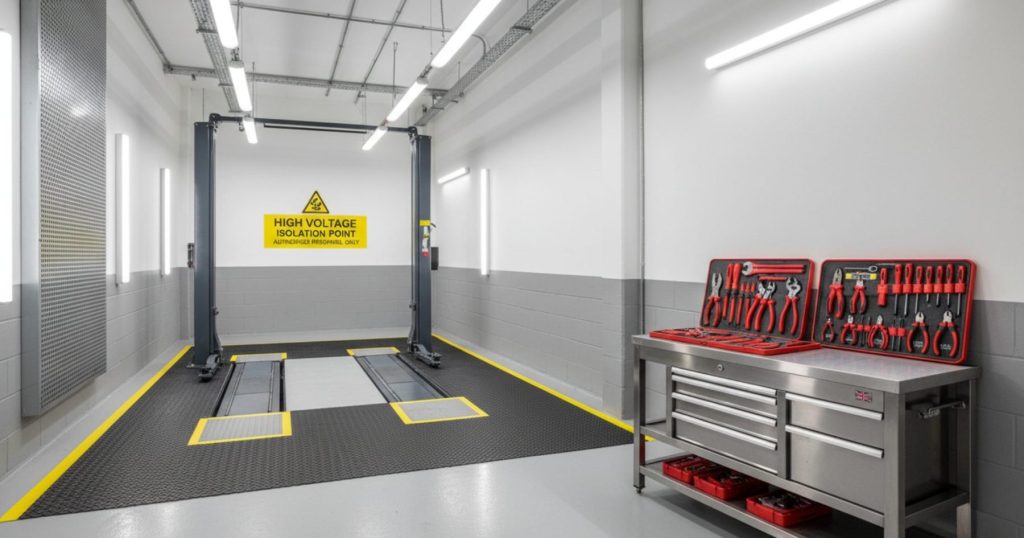
- Dedicated EV bay: Whether a single bay for independents or a designated zone for dealerships, this area must be exclusively for EV work, featuring non-conductive mats, high voltage equipment storage, and a secure lockout point for battery isolation.
- Staggered scheduling: Implement a system where EV diagnostics are managed by specialists, ensuring they have focused time without interruption. This prevents the disruption of high-volume ICE service schedules common in dealerships.
- Protocol for triage: A strict protocol must ensure all incoming EV vehicles are first checked by the certified technician for high voltage isolation before the general staff approach, ensuring zero risk of accidental contact.
Tools and infrastructure: Investing for the future
Your investment in certified personnel must be matched by an investment in the right equipment, regardless of your business model.
- Diagnostic tools and software: Access to OEM-level diagnostic software and scanners that communicate with the EV’s Battery Management System (BMS) is non-negotiable for both franchise and independent businesses wishing to perform serious repair work.
- High voltage equipment: This includes all specialised insulated tools (rated up to 1000V), Category III multi-meters, insulated gloves, face shields, and appropriate Personal Protective Equipment (PPE), forming the basic compliance kit.
- Charging capability: Install at least one robust Level 2 (fast) charging point on site. This is necessary to service vehicles and demonstrates the capability to fleet clients and retail customers alike.
ROI considerations: Future-proofing your profitability
Even if EVs currently constitute a small percentage of your jobs, certified technicians secure your financial future: they ensure you capture high-value, complex revenue, protect you from liability, and guarantee the long-term viability of your business by maintaining a relevant service offering as the ICE market inevitably declines.
5. Case studies and real-world examples
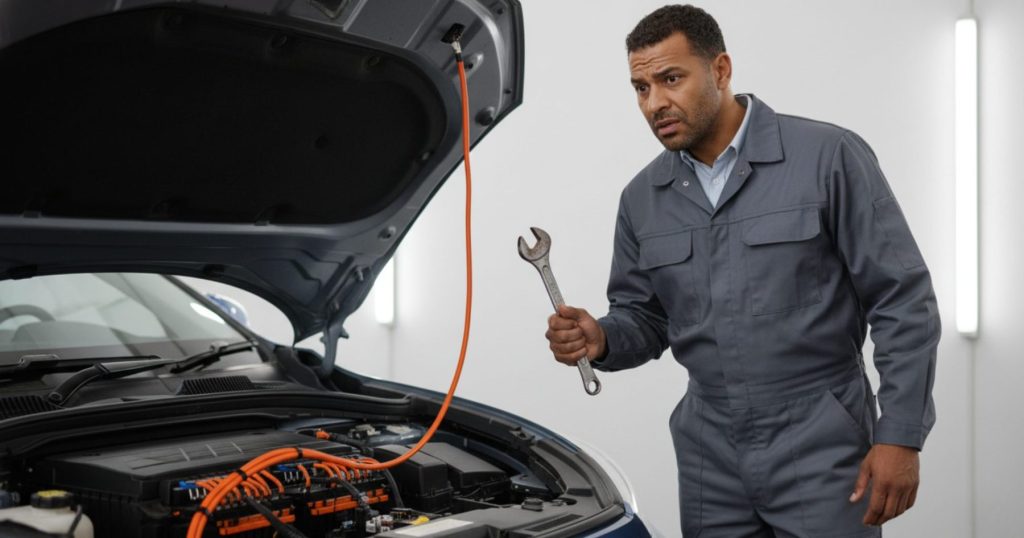
The transition isn’t theoretical, real businesses are already securing massive competitive advantages by acting now. You can learn directly from these pioneers who recognised the urgency of the skills gap and used certified technicians to unlock exponential growth.
Example 1: The local garage that transformed its bottom line
A successful, established independent garage in the West Midlands, facing declining ICE service hours, made a bold move: they hired one IMI Level 4 EV specialist and provided internal Level 3 training to their lead mechanic. They dedicated one bay, invested £15,000 in specialised insulated tools and diagnostics, and partnered with a local EV fleet company.
In 12 months, this garage saw a 30% increase in total service revenue attributable solely to EV and hybrid work. This growth wasn’t just volume, the average invoice value for EV diagnostic work was 45% higher than their traditional full service. The qualitative insight? The certified technician served as a confidence booster. Fleet managers, worried about vehicle downtime, chose the certified independent option over waiting weeks for an OEM appointment, seeing the certification as a guarantee of quality and swift service.
Example 2: The dealership that mastered EV diagnostics
A large multi-brand dealership group in the South East was struggling to scale its EV service capacity despite high sales volume. Their main bottleneck was lengthy diagnostic times for battery and drivetrain faults, often taking over a week, leading to severe customer dissatisfaction and a high volume of vehicles stuck in the service bay.
Their solution was to utilise three IMI Level 4 certified Master Technicians dedicated purely to complex EV diagnostics and systems repair. By integrating these professionals, the dealership immediately established a dedicated diagnostic stream, reducing average fault identification time from seven days to under two. Crucially, the qualitative change was the dramatic improvement in workflow efficiency and customer trust. The certified team ensured swift, accurate, and warranty-compliant repairs, allowing the dealership to secure high-value corporate fleet service agreements. Your focus on certification delivers measurable efficiency and profit.
These examples clearly demonstrate that certified EV technicians are not merely a cost centre, they are highly leveraged profit drivers and essential operational stabilisers, capable of delivering superior service quality, customer satisfaction, and tangible operational efficiency.
6. The consequences of delay
As a visionary business owner, you must weigh the benefits of acting now against the devastating consequences of waiting. The cost of delay in the EV market is exponential, manifesting not just as missed opportunities but as serious threats to the long-term viability and reputation of your organisation.
Missed revenue opportunities: Handing profit to the competition
Every week you delay hiring or upskilling a certified EV technician is a week you are forced to turn away high-value EV and hybrid diagnostic work. These customers will not wait, they will go to the only certified option in your area, your competitor.
The true revenue missed is compound: you lose the initial high-value job, and you lose the future service and maintenance work for that same customer. By delaying, you are actively facilitating your competitors’ growth, allowing them to capture market share and establish themselves as the local EV authority, making it incredibly difficult for you to compete later.
Skill shortage impact: The vicious cycle of scarcity
The skills gap is already widening. Waiting until EVs constitute 50% of your service inquiries means you will be entering the hiring race at its most competitive and expensive point. As demand for certified technicians soars:
- Salaries will increase sharply: You will have to pay a significant premium to attract the few available certified professionals.
- Retention becomes difficult: Existing certified staff will be constantly poached by larger organisations.
- Training costs skyrocket: Third-party training providers will raise course fees as demand outstrips capacity.
The consequence of delay is that hiring the necessary talent becomes harder, slower, and dramatically more expensive, creating a vicious cycle where your lack of capability continues to stifle your growth.
Reputation risk: Safety and warranty issues
The most severe consequence of delay is the risk to your reputation and legal standing. Attempting to service or repair high-voltage systems without proper certification exposes your business to enormous risk:
- Accidents and injury: The possibility of severe injury or fatality from electrocution is real and cannot be mitigated by guesswork. This would permanently shatter your reputation.
- Warranty voidance: Improper, non-certified repairs to an EV’s complex systems can void the manufacturer’s warranty, leaving your customer (and potentially your business) liable for costly component failure.
- Negative reviews: Service providers that fumble EV service, take too long, or return vehicles with unresolved faults will face a swift, public backlash online, destroying the trust you have spent years building.
You cannot afford to sacrifice safety, compliance, or customer trust by avoiding the necessary investment in certified expertise.
7. How to attract and retain certified EV technicians
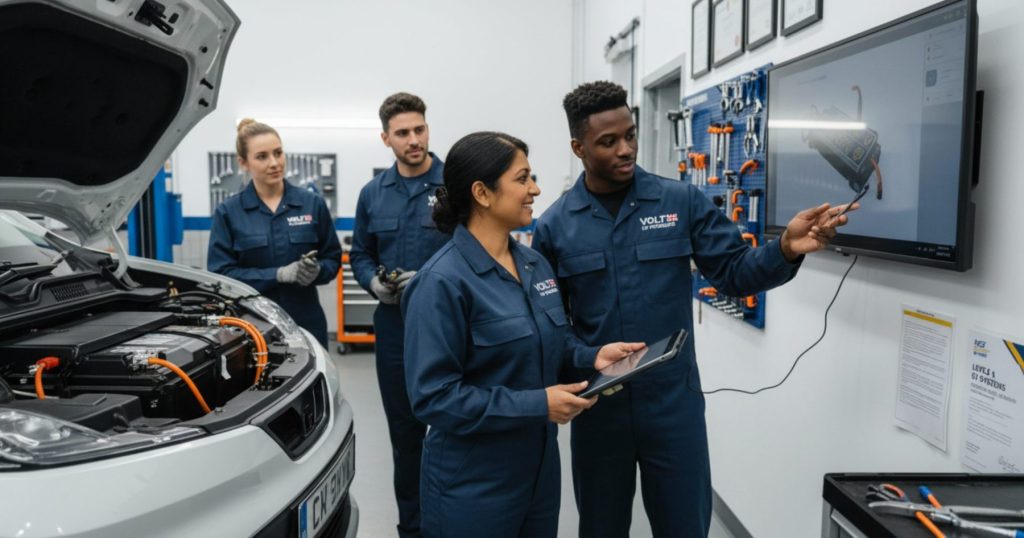
Securing the best EV talent requires a proactive, strategic approach that goes beyond simply posting a job advert. Certified EV technicians are scarce, highly valued, and fully aware of their worth. You must position your organisation as the preferred employer of choice in your region.
Offer competitive salaries and benefits
In a skills-short market, compensation is the primary differentiator. You must benchmark the salaries for IMI level 2 to level 4 technicians accurately and be prepared to pay a premium. However, compensation extends beyond just the basic salary:
- Performance bonuses: Tie bonuses directly to successful, first-time EV diagnostics and positive customer feedback on EV service jobs.
- Tool allowance: Offer generous allowances for high-voltage tools, recognising the expense involved in maintaining certified equipment.
- Health and well-being: Ensure a robust benefits package that reflects your commitment to your highly specialised staff.
Provide access to ongoing training and OEM-specific programmes
Certified technicians are lifelong learners. The pace of change in EV technology, from new battery chemistries to evolving software, is relentless. Your commitment to their professional development is a critical retention tool:
- Scheduled training budget: Allocate a specific annual budget for each certified technician to attend specialist training, including OEM courses (Tesla, BMW, etc.) and advanced diagnostic workshops.
- Internal knowledge sharing: Position your lead EV technician as a mentor and pay them for their time teaching your upskilling staff. This elevates their status and increases their engagement.
Build a positive culture emphasising safety, technology, and innovation
A certified technician wants to work in a service workshop that takes safety seriously and embraces technology:
- Safety first: Demonstrate an unwavering commitment to high voltage safety. Ensure all safety gear is top-tier and maintained. Technicians will gravitate toward environments where they feel protected.
- Empowerment: Give your EV technicians ownership over the EV service bay. Involve them in purchasing decisions for new diagnostic equipment. This shows you respect their expertise and judgment.
- Innovation: Highlight your plans for future expansion, such as integrating Vehicle to Grid (V2G) technology or solar charging on site, demonstrating that they are joining a forward-looking business.
Partner with specialists to find the right talent
Finding niche EV talent through general job boards is inefficient. You should partner with recruitment specialists who have established networks within the automotive service sector and specifically focus on EV talent acquisition. These recruiters can help you craft compelling job specifications, target certified individuals currently working within the OEM network, and accurately benchmark market-rate salaries. You need to utilise every tool available to secure your business’s future talent.
Conclusion and call to action: Secure your future now
The EV revolution is accelerating, and the UK’s roads are filling with electric and hybrid vehicles that require expert, certified attention. Independent businesses and EV service providers that act now to hire certified EV technicians are taking a decisive step to capture market share, drastically improve operational efficiency, and position themselves as indisputable leaders in the burgeoning EV service ecosystem.
This is not a future projection, this is a current, operational imperative. Investing in certified EV talent is not just about meeting today’s service demand, it is the single most important investment you can make to future-proof your business in a rapidly changing automotive landscape. It ensures safety, secures high-value revenue streams, and protects your reputation against the inevitable risks of delay.
The time to hire is now. Don’t wait until your competitors capture the EV market and the skills pool is depleted. Secure certified EV technicians today and ensure your business doesn’t just survive, but thrives in the electric future.