Recruiting qualified EV technicians in the UK: What employers need to know about IMI Levels 2–4
1. Introduction: Why EV recruitment feels harder than expected
For many UK independent garages and dealerships, recruiting EV technicians feels more difficult than it should. Electric and hybrid vehicles are now a familiar sight in workshops, yet finding the right people to work on them confidently and safely remains a challenge.
This frustration does not usually come from a lack of effort. Employers are advertising roles, investing in equipment and encouraging training. Still, something feels misaligned. EV jobs take longer to book in, complex faults are delayed and responsibility often falls on a small number of individuals. Over time, this creates uncertainty rather than confidence.
Part of the issue is that EV recruitment is still treated as a future problem. In reality, EV work is already here. Vehicles arrive mixed into everyday bookings, not as specialist exceptions. This means recruitment decisions now carry immediate operational consequences, not long-term theoretical ones.
Another challenge is that many employers understand that IMI levels matter, but are unsure how they translate into day-to-day workshop capability. Knowing that Level 2, Level 3 and Level 4 exist is not the same as knowing which one your workshop actually needs.
This article is written to address that gap. It is not about selling roles or promoting training. It is about helping UK employers understand how IMI levels link to real responsibility, real workflow and real risk inside an EV-capable workshop.
2. The reality of the UK EV technician market
The UK EV technician market is often described as a skills shortage, but that description only tells part of the story. Interest in EV work has grown significantly and many technicians now hold some level of EV qualification. The challenge lies in how that capability is distributed.
Most workshops have seen growth at the entry point. IMI Level 2 awareness has become more common, helping garages manage basic EV safety requirements. This is a positive development and an important foundation. However, progression beyond this level has been slower.
IMI Level 3 and Level 4 capability requires more than classroom learning. It takes time, exposure and confidence built through repeated real-world EV work. As a result, technicians with deeper EV experience remain limited in number, particularly outside larger groups or specialist environments.
Independent garages and dealerships feel this imbalance more sharply. With smaller teams, gaps in capability are more visible. There is less redundancy when a single technician is absent or stretched across too many responsibilities. When the right level of EV capability is missing, workflow slows and risk increases.
This does not mean employers are doing something wrong. It means the market has evolved faster than many expected and recruitment decisions now need to be more precise. Understanding what each IMI level actually delivers is essential to navigating this reality.
3. Understanding IMI Levels: Why they matter in recruitment
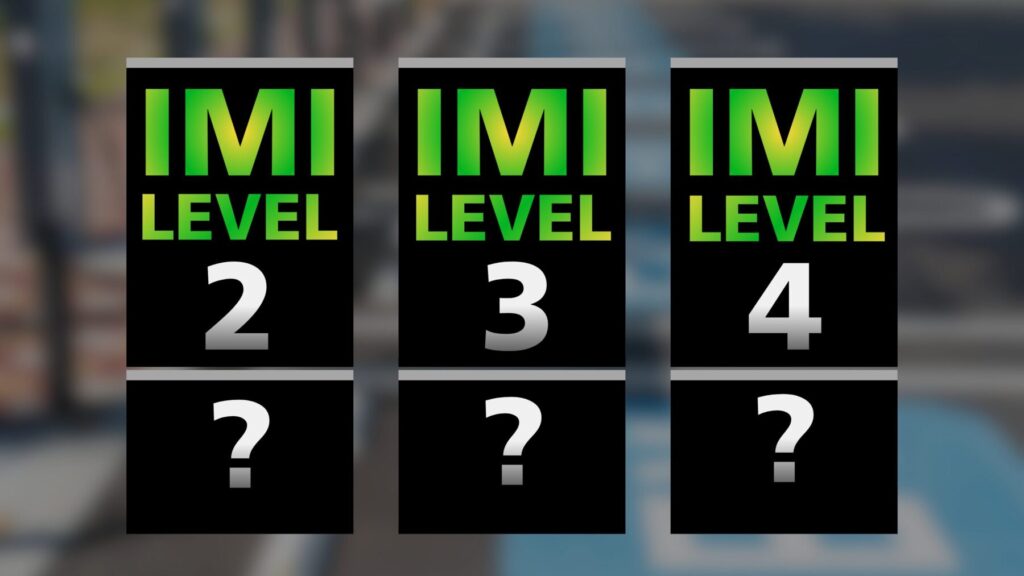
IMI levels are often discussed as qualifications, but for employers, they are better understood as frameworks for responsibility. Each level exists to define what a technician can safely and appropriately do around high voltage systems.
When recruitment decisions are made without this clarity, problems follow. Technicians may be asked to work beyond their authorised scope. Managers may assume capabilities that do not yet exist. In both cases, safety and efficiency are compromised, even when intentions are good.
Using IMI levels correctly helps employers do three things. First, it supports safe task allocation. Second, it clarifies accountability when decisions need to be made. Third, it protects both the business and the technician from unnecessary risk.
Recruitment becomes more effective when IMI levels are used as planning tools rather than labels. Instead of asking, “Can this technician work on EVs?”, the more useful question is, “What responsibility does this level allow them to carry in our workshop?”
With that in mind, it is important to look at each level in practical terms, starting with the foundation.
4. IMI Level 2: Safety awareness and controlled support
IMI Level 2 is focused on EV hazard awareness. It provides technicians with the knowledge to work safely around electric and hybrid vehicles, particularly in relation to high-voltage systems. This includes understanding risks, following isolation procedures and recognising boundaries.
In a workshop setting, Level 2 technicians often support routine servicing, preparation and controlled tasks where high voltage exposure may be present but not directly handled. They play an important role in enabling EV work to take place safely as part of normal operations.
However, Level 2 does not authorise technicians to carry out repairs on high voltage components or to take responsibility for complex diagnostics. This distinction is critical. When Level 2 is treated as a repair qualification, risk increases quickly.
Level 2 works best in workshops where EV work is emerging or where technicians are building experience under clear supervision. It provides a foundation, not a solution. Employers relying solely on Level 2 often encounter bottlenecks when faults escalate beyond routine work.
Understanding these limits allows Level 2 technicians to contribute confidently without being placed under pressure to exceed their scope.
5. IMI Level 3: Authorised repair and practical EV capability
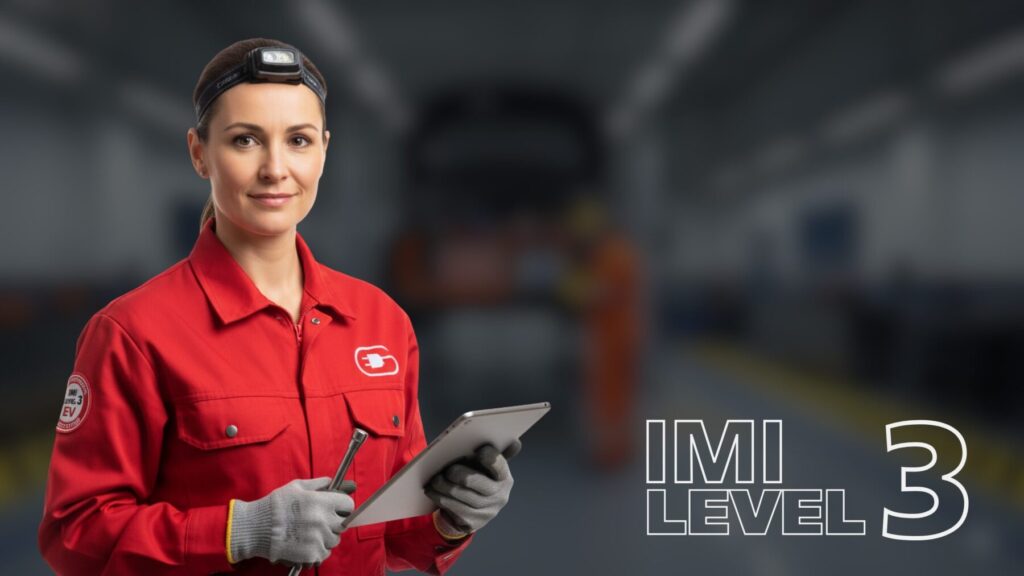
IMI Level 3 marks a significant step change in EV capability. Technicians at this level are authorised to diagnose faults, remove and replace high voltage components and carry out structured testing on EV and hybrid systems.
For many independent garages, Level 3 technicians form the operational backbone of EV servicing. They allow work to stay in-house, reduce reliance on escalation and support consistent workflow as EV bookings become more frequent.
Level 3 capability is not just about technical skill. It requires discipline, structured thinking and respect for procedure. Successful Level 3 technicians are methodical in their approach, testing and confirming faults rather than relying on assumptions.
Problems arise when expectations become unrealistic. Level 3 does not mean unlimited authority. Advanced diagnostics, complex system interaction and high-level decision making may still fall beyond the scope, depending on the situation. When Level 3 technicians are expected to fill every gap, pressure builds and confidence suffers.
Used correctly, IMI Level 3 provides balance. It bridges the gap between awareness and advanced expertise, supporting safe, efficient EV operations in a wide range of UK workshop environments.
6. IMI Level 4: Advanced diagnostics and senior responsibility
IMI Level 4 represents the most advanced level of EV technical capability currently recognised within the UK framework. It is often misunderstood as simply “the next step” after Level 3, but in practice, it serves a very different purpose within a workshop.
Level 4 technicians are trusted to deal with complex EV and hybrid system faults that fall outside routine repair. This includes advanced diagnostics, in-depth electrical analysis and fault finding where system interaction is less predictable. At this level, technicians are expected to apply judgement rather than follow fixed processes alone.
The value of Level 4 capability lies in decision-making. When EV faults are intermittent, unclear or high risk, someone must take responsibility for determining the correct course of action. Level 4 technicians provide that confidence. They help workshops avoid unnecessary part replacement, repeated work, or prolonged downtime caused by uncertainty.
However, Level 4 is not required in every environment. Workshops with low EV volumes or limited diagnostic complexity may not benefit from senior capability immediately. Hiring Level 4 too early can create an imbalance, particularly if the workload does not justify the responsibility or if other EV capability is missing.
Where EV work is frequent, complex, or business critical, Level 4 provides stability. It supports other technicians, reduces escalation and allows garages to retain control over challenging EV jobs rather than relying externally.
7. Common EV recruitment mistakes employers make
Most EV recruitment mistakes are not caused by poor judgment. They come from pressure, urgency and uncertainty. As EV work increases, employers often feel the need to act quickly, which can lead to decisions that create longer-term issues.
One common mistake is hiring the wrong IMI level for the actual workload. Some workshops overhire, bringing in senior capability where routine support would suffice. Others underhire, expecting Level 2 or Level 3 technicians to cover responsibility that sits beyond their scope.
Another frequent issue is blurred role definition. When job descriptions are vague, technicians may feel unclear about what is expected of them. This can lead to hesitation, stress or unsafe escalation. A clear scope is essential for confidence and consistency.
Employers also sometimes assume certification replaces experience. While IMI levels provide structure, real EV competence is built through time, repetition and exposure. Without experience, even certified technicians may need support.
Finally, expecting one individual to carry all EV responsibility is risky. EV work is safest and most sustainable when capability is shared across a balanced team rather than concentrated in one role.
8. How to match IMI Level to real workshop needs
Effective EV recruitment starts with understanding the current workshop reality. Rather than planning for what EV work might look like in five years, employers benefit from assessing what is happening on the ramps today.
Key questions include how often EV and hybrid vehicles are booked in, where work slows down and which tasks require escalation. Bottlenecks often reveal the level of capability that is missing, not the number of technicians.
Workshops should think in terms of team balance. Level 2 provides safe preparation and support. Level 3 enables authorised repair and keeps work moving. Level 4 stabilises complex decision-making. No single level solves every problem.
Planning progression internally can also be effective. Supporting technicians to move gradually from Level 2 to Level 3, or from Level 3 towards Level 4, allows capability to grow alongside workload. This approach reduces risk and improves retention.
Matching IMI level to workload is not a one-time decision. It should be reviewed as EV volumes and complexity increase.
9. What EV technicians look for when choosing a role

EV technicians are becoming more selective. As responsibility increases, so does awareness of risk, workload and environment. Many technicians now assess roles carefully before making a move.
A clear scope is one of the strongest attractions. Technicians want to understand what sits within their IMI level and what does not. This clarity reduces pressure and builds trust.
Safety systems also matter. Technicians look for workshops that take isolation procedures, documentation and risk management seriously. A professional EV environment signals long-term commitment rather than short-term experimentation.
Progression is another factor. Technicians value development that is realistic and structured, not rushed. Experience, support and time are often more appealing than quick qualification promises.
Ultimately, technicians choose environments where EV work feels controlled, respected and sustainable.
10. Final thought: EV recruitment is about alignment, not speed
Recruiting qualified EV technicians in the UK is not about moving faster than the market. It is about aligning responsibility, capability and workload in a way that protects people, vehicles and businesses.
IMI Levels 2, 3 and 4 each play a distinct role. Problems arise when those roles are misunderstood or forced to compensate for gaps elsewhere. When levels are aligned correctly, workshops gain confidence rather than pressure.
EV recruitment works best when employers take time to understand what they truly need today and what they are realistically building towards tomorrow. Alignment, not urgency, leads to safer operations, stronger teams and sustainable EV capability.