Electric vehicle recruitment in the UK: Finding the right multi-skilled, EV-qualified vehicle technicians
1. The UK automotive workforce is changing
And the recruitment conversation is changing with it
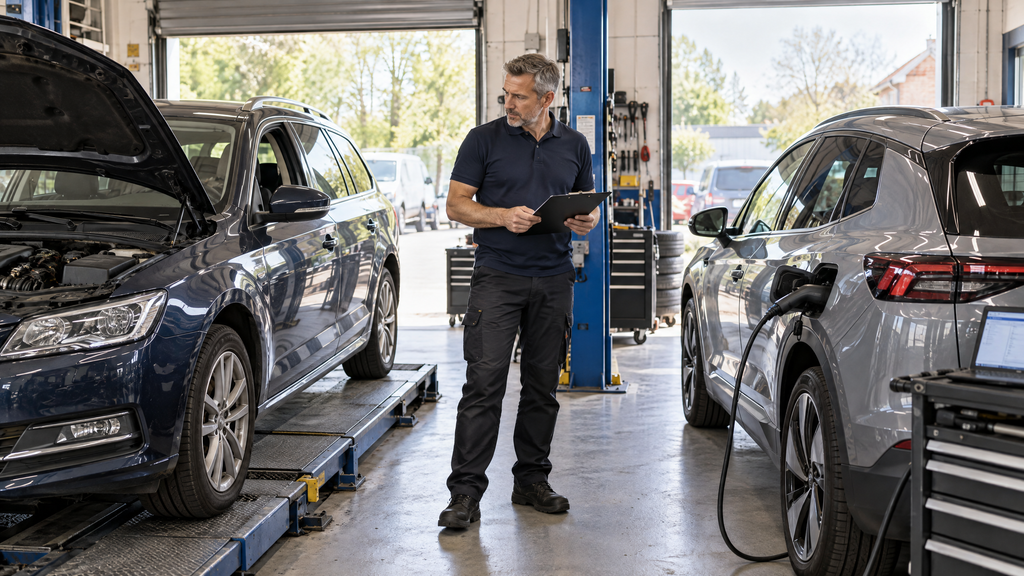
A garage owner in the North West told us recently that five years ago, customers rarely asked about EV servicing. Today, it is one of the first questions customers ask. He runs a general independent garage, dealing with whatever comes through the door and more now have a plug attached.
That reflects a wider change across UK automotive. Battery electric cars have reached almost 1.8 million on UK roads. Plug-in vehicles made up 34.5% of new car registrations in 2025, while the average car on UK roads is now 9.7 years old.
As the vehicle mix changes and the car parc ages, more vehicles will move beyond their manufacturer warranty and into the wider aftermarket.
Recruitment is changing with it. IMI data shows growing demand for technicians and more vacancies asking for EV experience. An EV qualification matters, but so does practical experience and wider workshop skills from day one.
2. What electric vehicle recruitment actually means
It is broader than the job title suggests
When employers search for electric vehicle recruitment support, they are not always looking for technicians who work exclusively on EVs. In many cases, particularly in the independent sector, that kind of narrow specialisation would be a poor commercial fit. A sole EV technician with no ICE capability in a workshop where 80% of vehicles are still petrol or diesel is a resource that spends most of its day underutilised.
What most independent workshops actually need is a vehicle technician who has built their career on ICE servicing, diagnostics and repair and who has added EV and high-voltage qualifications on top of that foundation. Someone who can service a petrol engine in the morning, identify a fault on a hybrid system after lunch and carry out appropriate EV work when the job and their qualification level allow it. EV capability is increasingly becoming an additional technical specialism within the wider vehicle technician profession rather than a completely separate occupation.
That distinction shapes everything about how you approach the recruitment conversation. You are not looking for an EV-only hire. You are looking for a vehicle technician whose capabilities now extend into EV and high-voltage systems.
3. Why EV qualifications matter, but should not end the conversation
The difference between a certificate and a competent technician
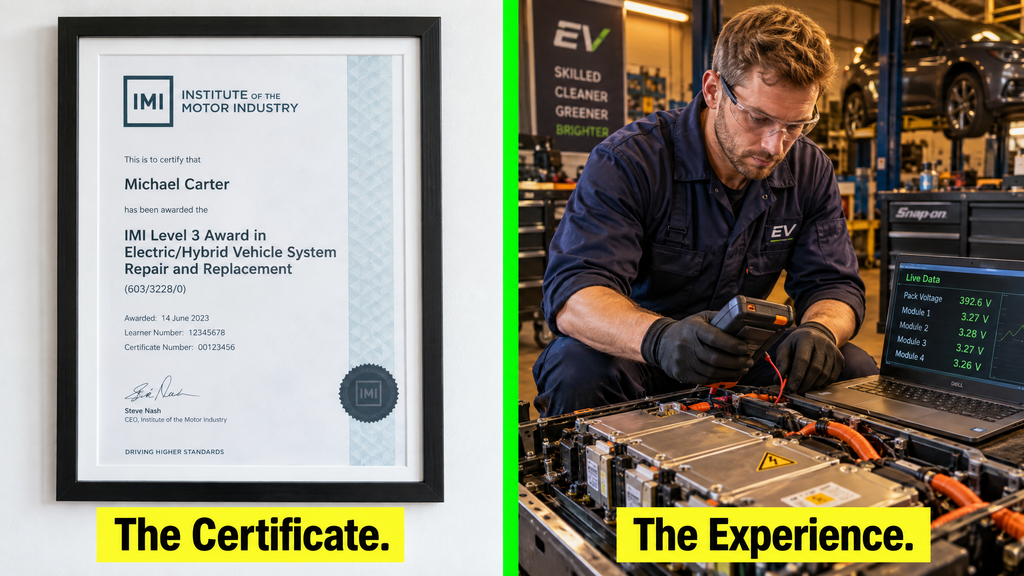
IMI EV qualifications provide a recognised, independently assessed benchmark. They demonstrate that a technician has covered the knowledge and practical elements required to work safely around high-voltage systems at a defined level. For employers, they provide a degree of assurance that is particularly important where high-voltage work is involved. That matters and should not be understated.
But a qualification tells you what someone has learned and been assessed on. It does not automatically tell you what they have done with that knowledge in a working workshop environment. There is a meaningful difference between a technician who completed their Level 3 qualification last month and has had limited opportunity to apply it and a technician who qualified several years ago and has been working regularly on hybrid and electric vehicles since.
When you are assessing EV-qualified candidates, the questions that follow the qualification check are often the more revealing ones. What EV or hybrid work have they actually carried out? How frequently do they work on electric vehicles? What high-voltage systems have they encountered in practice? Have they worked independently or always under supervision? How do they approach an unfamiliar fault on a vehicle they have not seen before? The qualification opens the door. The answers to these questions tell you what is behind it.
By the end of 2025, 74,734 UK technicians held an EV qualification according to IMI TechSafe data. Qualification levels and practical experience behind those certificates vary considerably. Understanding the difference matters for every hiring decision. Source: IMI TechSafe June 2026
4. Practical high-voltage experience is becoming increasingly valuable
What regular EV work actually develops in a technician
There is a significant difference between a technician who holds an EV qualification and one who applies that qualification regularly in a live workshop environment. High-voltage competence develops through repetition, exposure and the kind of problem-solving that only happens when you are working through a real fault on a real vehicle under time pressure.
Technicians who have built genuine practical experience tend to be more confident in safe isolation procedures, more methodical in their approach to diagnostic work and more adaptable when faced with vehicle architectures they have not previously encountered. They have developed the habits of careful, systematic working that high-voltage environments require. That kind of embedded competence is not something that can be assessed from a certificate alone.
Not every workshop needs the same depth of high-voltage capability. A garage primarily offering routine EV servicing and maintenance has different requirements from one carrying out complex fault diagnosis or battery-level work. Being clear about the level of practical experience your workshop actually needs and assessing candidates against that specific requirement rather than against a general sense of EV qualification leads to better hiring decisions.
5. EV battery competence is becoming a bigger part of the skills conversation
Beyond basic EV awareness, battery capability is increasingly in demand
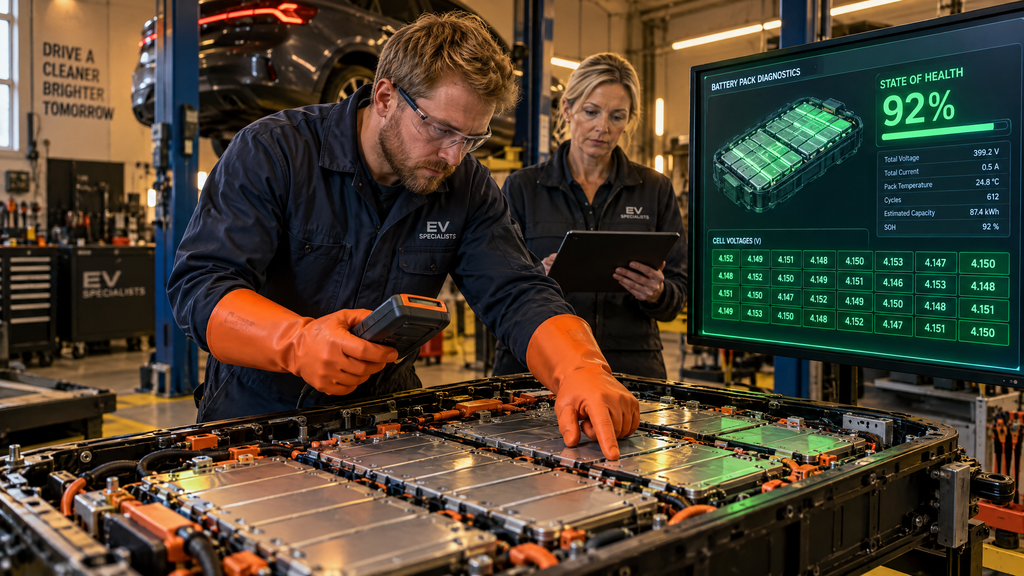
A few years ago, the primary concern in EV-related recruitment was whether a technician could work safely around high-voltage systems. That remains important. But the conversation is broadening. As the UK EV population grows and vehicles age, attention is shifting towards battery diagnostics, battery health assessment and more complex EV repair capability.
Holding a higher-level EV qualification and having substantial hands-on battery experience are not automatically the same thing. Some technicians may have achieved Level 3 or Level 4 qualifications through structured training programmes but have had limited real-world exposure to battery diagnostic work. Others, typically those who have spent time in specialist EV environments or busy dealership workshops, may have developed deeper practical battery experience alongside their formal credentials.
When battery-related capability matters to your workshop, the assessment needs to go beyond qualification level. It means asking candidates specifically about their battery diagnostic experience, the tools and platforms they have used, the faults they have encountered and how they approached them. The technicians who can speak credibly and in detail about battery work are the ones most likely to contribute meaningfully in that area from the outset.
6. Why multi-skilled technicians matter to independent workshops
Versatility is a commercial asset, not a compromise
The commercial case for a multi-skilled technician in an independent workshop is straightforward. If your workshop sees a mixed workload of petrol, diesel, hybrid and electric vehicles, a technician who can contribute across all of them is more productive and more useful than one restricted to a single category. Every day that a narrow specialist is limited to a smaller pool of available work is a day of underutilised capacity.
A properly selected multi-skilled, EV-qualified vehicle technician could work across everyday ICE servicing, hybrid maintenance, general diagnostics and appropriate EV work, depending on their qualification level and practical experience. They contribute to the workshop’s current revenue while simultaneously strengthening its ability to take on EV work as that demand grows. You are not paying for an EV technician. You are paying for a vehicle technician with additional EV capability.
The workshops that find this most valuable are those where referring EV work elsewhere is already a visible commercial problem. Once that happens regularly enough, the value of having the right skills in-house becomes easy to calculate.
7. Recruitment should start with the capability your workshop actually needs
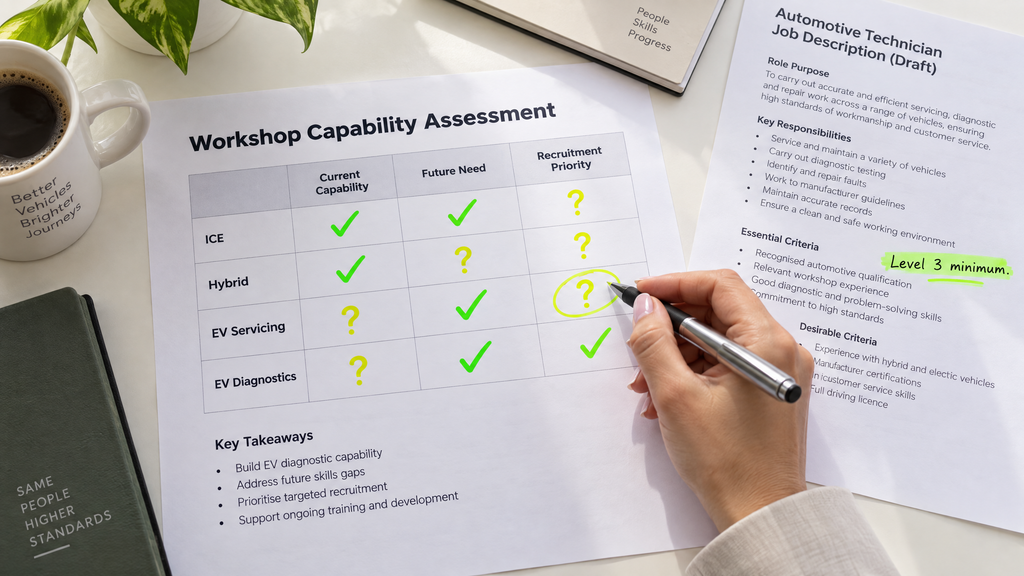
Clarity before advertising saves time and leads to better hires
One of the most common patterns in EV-related recruitment is an employer beginning the process with a vague sense that they need an EV technician without having worked out precisely what that means for their specific workshop. The result is a job advert that attracts the wrong candidates, a shortlist that does not match the actual requirement and a hire that disappoints both sides within a few months.
The more useful starting point is a clear description of the work the new technician will actually be doing. What proportion involves EV or hybrid vehicles? What level of high-voltage work is required? Is battery diagnostic capability needed now or in the future? What ICE skills are still essential? Answering these questions before writing a job description leads to a more precise recruitment brief and a shortlist that reflects the real requirement.
This is also where the connection between recruitment and workforce planning becomes practical rather than theoretical. The technician you hire today needs to fit the workshop you have now and contribute to the capability you are building for the future. Those two requirements are sometimes different and understanding that gap is part of what makes EV recruitment in 2026 more complex than posting a vacancy and waiting.
8. The challenge of finding the right candidates

Why the best people are often not actively looking
The strongest EV-qualified technicians in the UK are, in most cases, already employed. They are working in dealerships, specialist EV workshops or independent garages that have already recognised their value. They are not browsing job boards on a Tuesday evening. They are unlikely to see a standard vacancy advert.
Reaching these candidates requires a different approach. Talent mapping, passive candidate engagement and direct outreach to people who are not actively applying are often more effective than advertising alone for harder-to-fill EV roles. Salary benchmarking matters too. A candidate who is already valued and well-compensated in their current role needs a compelling reason to move and vague references to a competitive package are rarely sufficient.
Job titles and experience descriptions also vary considerably across the sector. A technician with substantial practical EV experience may not describe themselves in the same terms a job advert uses. Understanding how EV capability is described across different employer types is part of what makes specialist recruitment support useful for workshops that need to fill these roles efficiently.
9. Qualifications plus experience plus capability
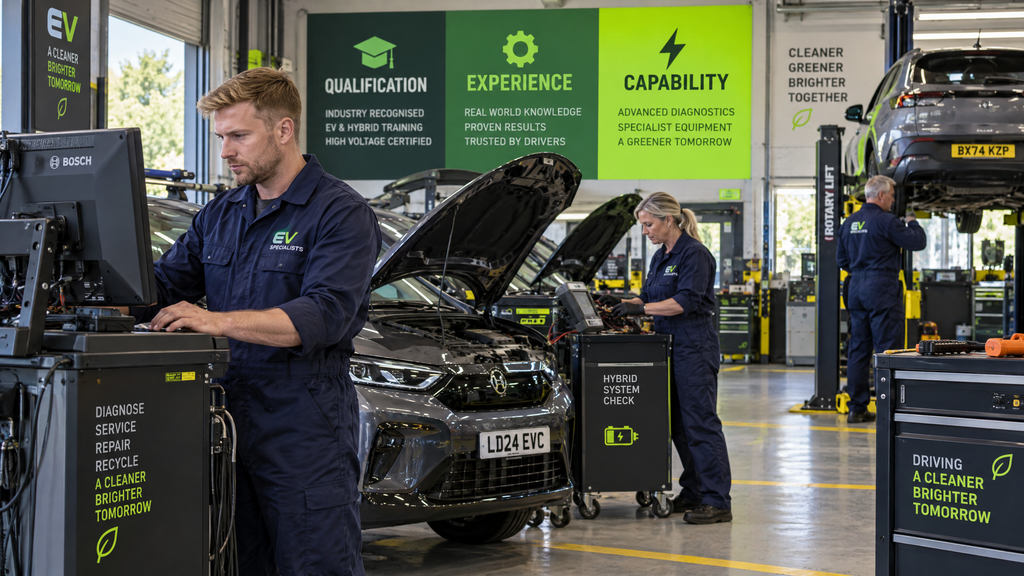
A framework worth returning to with every EV hire
The future of electric vehicle recruitment in the UK is not simply about finding technicians with EV certificates. By the end of 2025, 74,734 technicians held an EV qualification and the IMI projects that number reaching around 137,000 by 2032. But demand is expected to grow faster, with the projected shortfall potentially exceeding 43,000 technicians by 2035 if current trends continue. The IMI has described this as a dangerous skills shortfall that puts motorist safety at risk.
In that context, the technicians who stand out are not simply those with the right certificate. They are the ones who combine recognised qualifications with genuine practical experience in working workshop environments, wider vehicle technician skills across ICE and hybrid systems and the adaptability to contribute from day one. That combination is what most independent workshops actually need and it is the right framework for assessing any EV-qualified candidate.
Qualification. Practical experience. Wider workshop capability. Those three things together produce a technician who can strengthen your team now and help build the EV capability your workshop will need as the vehicle market continues to change. That is the conversation worth having before the next EV vacancy appears.
Sources: IMI TechSafe EV Technician Forecast June 2026, SMMT Motorparc 2025, Zapmap EV statistics August 2026, IMI EV qualification framework. IMI shortfall projections are based on current trends and should be treated as indicative forecasts rather than certainties. All figures verified at time of publication.