EV technician recruitment trends in the UK 2026: What employers need to know about IMI-certified talent
1. A morning in a changing workshop
On a wet Tuesday morning in Birmingham, a service manager scrolls through the booking system before the workshop doors open. EV jobs now fill nearly half of next month’s diary. Twelve months ago, it was closer to one in five.
Customers are not asking whether the garage can work on electric vehicles anymore. They assume it can.
The team is capable and committed. The tools are in place. Yet one concern keeps resurfacing. When the more complex EV jobs arrive, who in the workshop is authorised to take them on without hesitation?
This is the quiet reality for many independent garages across the UK in 2026. Demand is growing steadily, but recruiting the right IMI certified technicians is proving harder than expected. The challenge is no longer whether EV work will increase. It is whether workshops can secure the certified talent needed to manage it properly.
2. Where the UK EV market stands in 2026
By 2026, electric vehicles are firmly embedded in the UK automotive landscape. The shift is no longer gradual. It is structural. Independent garages are seeing consistent increases in EV related bookings across servicing, diagnostics and repair.
Several clear trends define the current position:
Growing EV parc across the UK
More electric vehicles are now moving beyond manufacturer warranty periods and entering the independent servicing market.
EV work becoming routine
High voltage checks, battery related diagnostics and software driven fault finding are no longer occasional requests. They are part of the weekly workflow.
Rising customer expectations
Vehicle owners increasingly assume that independent garages have properly trained and IMI certified technicians. Competence and safety are expected as standard.
Reduced margin for uncertainty
As EV systems become more complex, there is less tolerance for unclear capability or informal training.
The conclusion is straightforward. EV capability is no longer a differentiator. It is a baseline requirement. Garages that once treated electric vehicles as niche work must now integrate EV expertise into their core service strategy to remain competitive in 2026.
3. Why recruitment has shifted in 2026
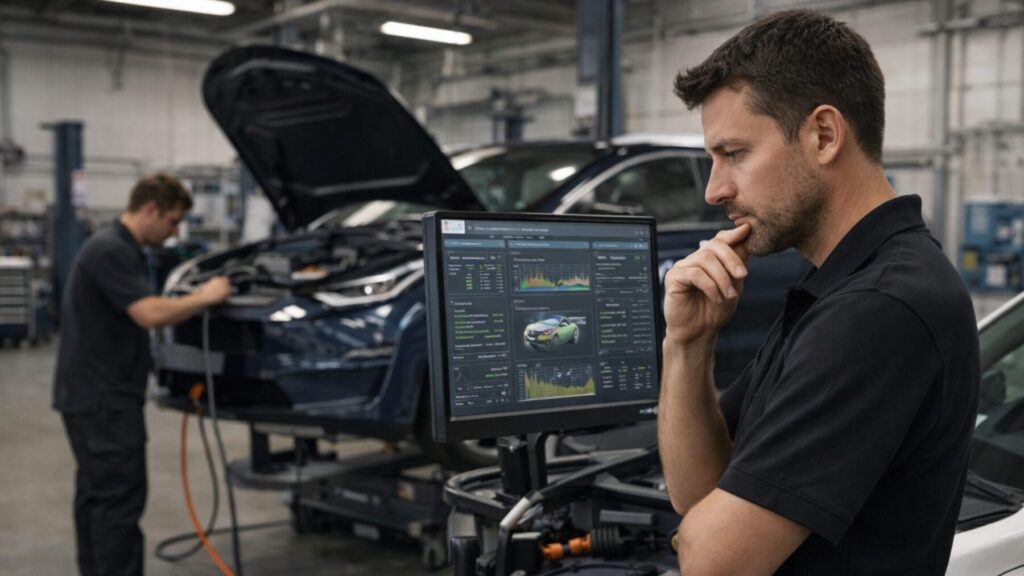
In the early stages of EV adoption, awareness training was often considered sufficient. Electric vehicles represented a small percentage of workshop volume and most tasks involved basic safety procedures rather than advanced diagnostics. For many independent garages, a limited level of capability was enough.
In 2026, that position has changed.
EV systems are more technically complex and increasingly software driven. Battery management, integrated control units and high voltage components require structured processes and clearly defined responsibility. The margin for assumption has narrowed. As complexity increases, the need for properly certified technicians becomes more critical.
Recruitment has therefore shifted from general mechanical experience to verified IMI capability. Employers are no longer satisfied with hearing that a technician has “worked on EVs”. They want clarity on certification level and an understanding of the scope of work that individuals can legally and safely undertake.
At the same time, competition for certified talent has intensified. Level 3 and Level 4 technicians are in particularly strong demand. Independent garages often find themselves competing with larger dealership groups for the same limited pool of qualified professionals, making recruitment more strategic than ever.
4. Understanding IMI levels clearly
For employers, clarity around IMI levels is essential.
IMI Level 2 focuses on safe working around electric vehicles. Technicians at this level understand high voltage awareness and how to avoid risk when working near EV systems. However, Level 2 does not extend to advanced fault diagnosis or high voltage repair.
IMI Level 3 allows technicians to diagnose and repair electric vehicle systems. This level carries greater responsibility and requires a deeper understanding of EV architecture and safety procedures.
IMI Level 4 represents advanced technical capability. These technicians are equipped to handle complex diagnostics and provide senior technical judgement. In many workshops, they act as the escalation point for challenging cases.
Understanding these distinctions is critical. Hiring without clarity around level and scope can lead to workflow bottlenecks, compliance concerns and operational pressure.
5. The 2026 talent imbalance
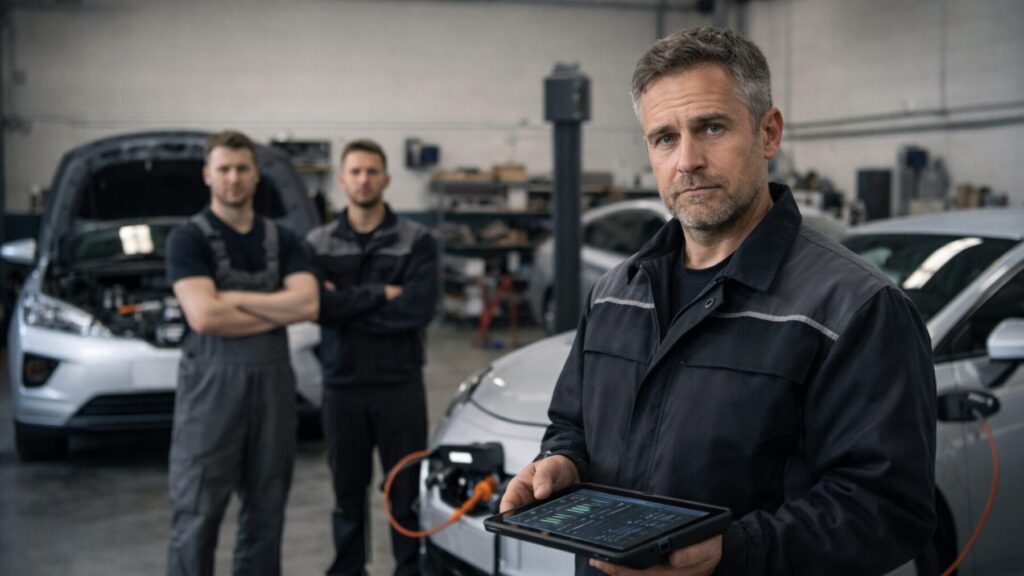
One of the defining recruitment trends of 2026 is imbalance.
While EV training has expanded across the UK, the distribution of certified capability is uneven. Many workshops now have technicians with foundational awareness, yet far fewer possess the higher level qualifications required for advanced EV work.
This imbalance typically appears in several ways:
Growth at Level 2
Industry wide training efforts have increased Level 2 awareness. More technicians understand safe working practices around electric vehicles, which is a positive step for workshop safety.
Limited progression to Level 3 and Level 4
The number of technicians progressing into full diagnostic and high voltage repair responsibility remains comparatively low. Advanced capability is not growing at the same pace as general awareness.
Concentrated responsibility
In many independent garages, only one or two individuals are authorised to handle complex EV diagnostics or major system repairs. When difficult jobs arrive, workflow slows as responsibility narrows.
Rising operational pressure
Senior technicians become overstretched, booking schedules tighten and escalation points become predictable bottlenecks.
For independent garages, the challenge is structural rather than temporary. EV demand will continue to rise. The critical question is whether the right balance of IMI certified talent is in place to support sustainable growth rather than reactive firefighting.
6. What employers are getting wrong
Despite good intentions, many independent garages are still approaching EV recruitment reactively rather than strategically.
A common mistake is hiring based purely on experience. A technician may have worked on electric vehicles for several years and feel confident handling EV systems. However, without confirmed IMI certification at the appropriate level, responsibility and scope remain unclear. Experience is valuable, but certification defines what a technician is formally authorised to undertake.
Another issue is assumption. Employers sometimes presume existing staff are effectively operating at Level 3 or Level 4 because they manage complex work without hesitation. Without formal verification, that confidence can mask compliance gaps and create exposure within the workshop.
There is also a tendency to recruit only when operational pressure becomes visible. When booking delays increase and senior technicians are overstretched, hiring becomes urgent. Urgency often leads to compromise, whether in capability assessment or long term planning.
In 2026, EV recruitment cannot be reactive. It must be deliberate, aligned with projected demand and built around clearly defined IMI levels rather than informal judgement.
7. What smart garages are doing differently
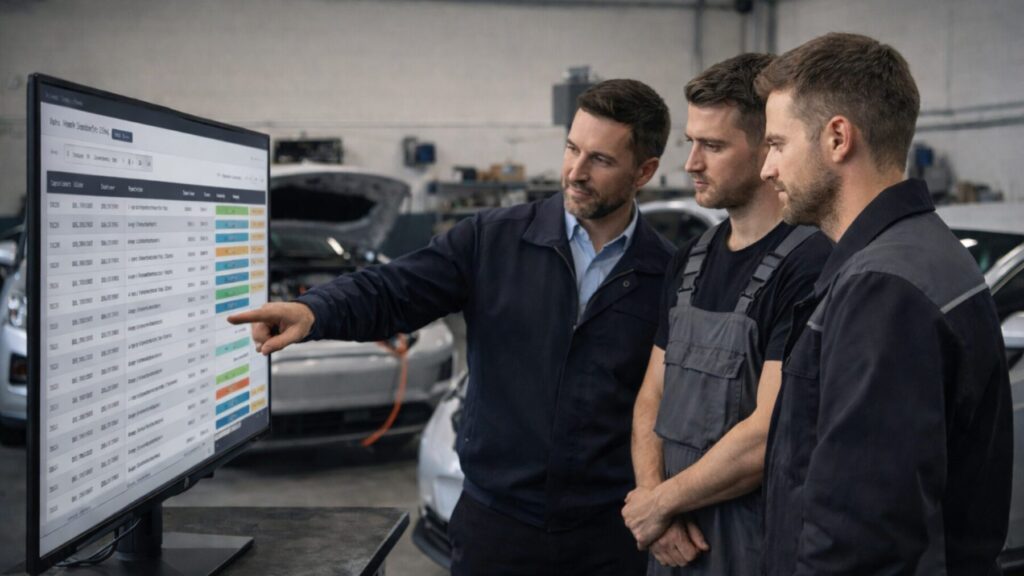
Forward thinking independent garages are treating EV capability as part of long term business planning.
Instead of asking, “Do we need another technician?”, they are asking, “Which IMI level are we missing?”
They are mapping current capability across the workshop and identifying where responsibility is concentrated. If one Level 4 technician carries all complex diagnostics, that is a risk. If only one Level 3 technician can progress high voltage repairs, that becomes a bottleneck.
Smart employers are also considering succession. As EV volumes grow, they are ensuring there is more than one person capable of stepping into senior responsibility. This creates resilience and protects workflow.
Most importantly, they are aligning recruitment with projected EV growth rather than current workload alone.
8. The cost of delaying EV recruitment
Delaying EV focused recruitment rarely causes immediate disruption. Instead, the impact builds gradually.
Lead times stretch by a few days. Senior technicians become the default escalation point for almost every complex job. Routine work is paused while higher level tasks are prioritised.
Over time, this imbalance affects morale. Skilled technicians can feel pressured and managers spend increasing time reshuffling work to keep the schedule intact.
There is also reputational risk. Customers expect independent garages to match the professionalism of main dealers when it comes to EV servicing. If turnaround times lengthen or confidence appears uncertain, trust can erode.
The cost of delay is not always visible on a financial report, but it is felt daily within the workshop.
9. Looking ahead: What 2027 might demand
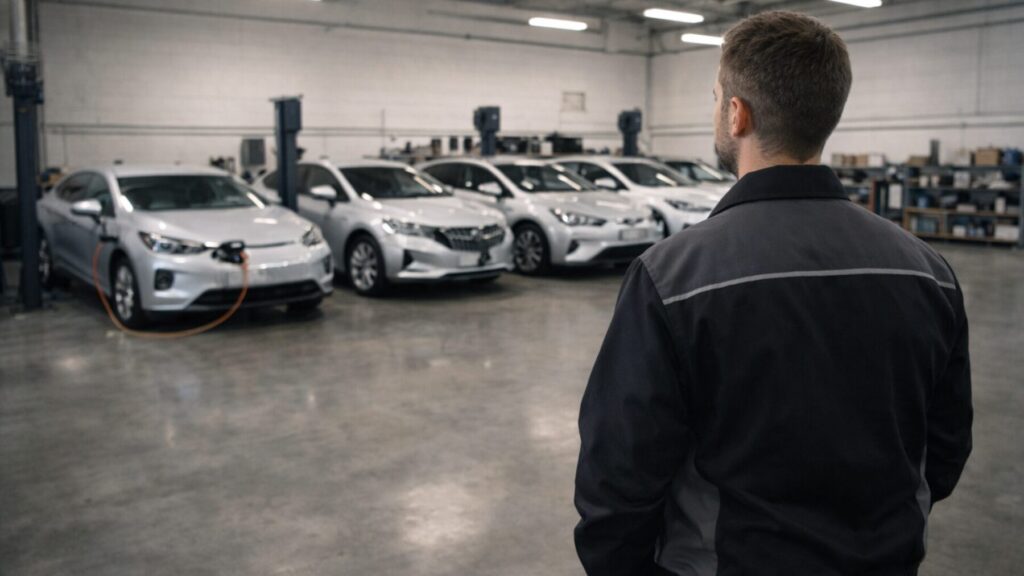
If 2026 has confirmed anything, it is that EV growth is not slowing.
As more electric vehicles move beyond manufacturer warranty periods, independent garages will play a larger role in servicing and repair. This will likely increase demand for Level 3 and Level 4 certified technicians in particular.
Regulatory scrutiny and customer awareness are also rising. Certification and documented competence will become increasingly important, not less.
Workshops that invest in certified capability now are positioning themselves for stability in 2027 and beyond. Those that rely on minimal coverage may find the gap widening.
10. Final reflection: Recruitment as risk management
Recruiting IMI certified EV technicians in 2026 is not simply about growth. It is about control.
Control over workflow.
Control over responsibility.
Control over risk.
Independent garages that understand the difference between awareness and authorisation and between experience and certification, are better equipped to manage rising EV demand with confidence.
The conversation has shifted. It is no longer “Can we work on EVs?” It is “Do we have the right certified people to do it properly?”
For UK employers, the answer to that question will define operational strength in the years ahead.