Left behind in the EV transition: Why independent UK garages are struggling to attract EV qualified technicians
1. The EV job that could not be booked
Late on a Thursday afternoon a regular customer arrives without an appointment. Their new electric vehicle displays a warning light and they are concerned about continuing to drive it. They trust the garage because it has looked after every vehicle they have owned for years. The expectation is simple. The same reliable service as always.
The technician reviews the message and recognises that the issue may involve a high voltage system check. The tools are available yet the required IMI Level qualification is not currently covered within the team. The decision becomes difficult. Delay the job, refer the customer elsewhere or attempt to manage expectations while capability is developed. None of these options feel ideal especially when the relationship with the customer has been built over time.
Situations like this are becoming more common across the UK. Independent garages, independent dealerships and EV service providers are seeing a steady increase in electric and hybrid vehicles entering the servicing cycle. The opportunity is clear yet access to IMI Level 2 IMI Level 3 and IMI Level 4 technicians remains limited. Demand is moving quickly while workforce capability is developing gradually.
This is not a reflection of unwillingness to adapt. Independent workshops are actively preparing for the EV transition yet structural challenges continue to affect hiring decisions. Understanding the gap between demand and technician availability helps explain why many businesses feel ready to move forward but constrained by limited access to qualified EV talent.
2. The reality on the ground: What independent garages are experiencing
Independent workshops are increasingly aware that EV capability is becoming essential. Many are ready to invest in tooling and training yet still struggle to attract qualified applicants with real EV experience. Even when vacancies are advertised the number of suitable IMI qualified candidates can be limited.
Workloads continue to increase as more electric and hybrid vehicles enter the servicing cycle. Teams may already be working at full capacity managing combustion vehicles alongside hybrid diagnostics. Without additional EV capability workshops may feel hesitant accepting more complex high voltage work. This uncertainty can slow growth and reduce confidence when engaging with EV owners.
Some businesses rely heavily on a single EV trained technician. While this individual provides valuable expertise the situation introduces risk. If that technician becomes unavailable the workshop may struggle to maintain EV service continuity. This dependence can create pressure across the wider team.
Revenue opportunities may also be affected. Some independent garages turn away EV related work or outsource diagnostics to third parties. Sub contracting reduces direct control over service quality and can extend turnaround times. Over time this may influence customer perception and loyalty.
There is also an emotional impact. Business owners often express frustration at feeling behind industry developments despite clear willingness to adapt. The intention to progress is strong yet access to qualified technicians remains a consistent barrier.
3. Why bigger brands are winning the EV talent war
3.1 Training investment and certification
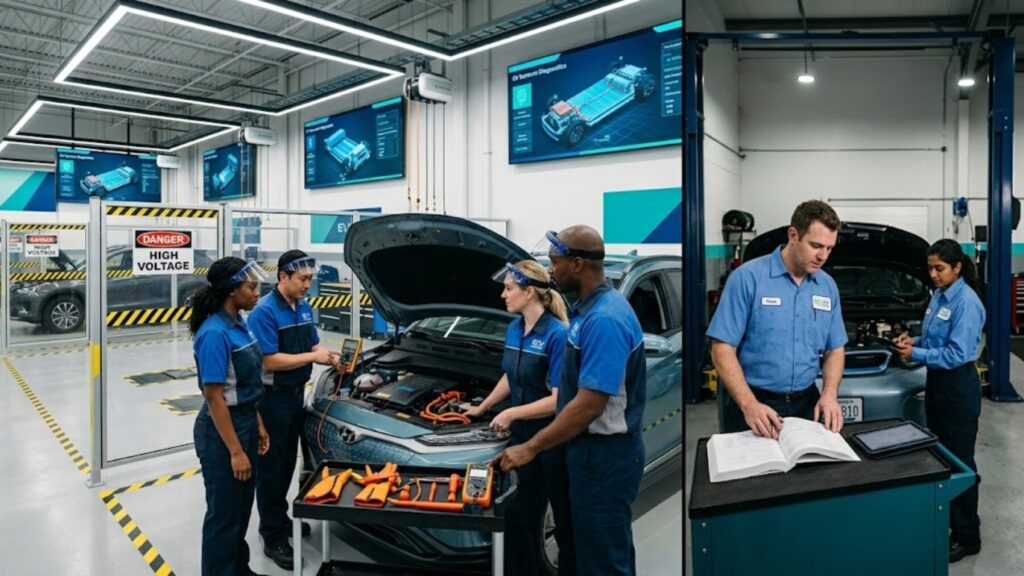
Larger organisations often allocate structured budgets for technician development. Manufacturer aligned training pathways support progression through IMI Level 3 and IMI Level 4 competencies. These pathways create clear technical progression which can appeal to technicians seeking long term stability and skill development.
Independent businesses often support training where possible yet operational demands can make extended time away from workshop duties more challenging. Training programmes require both financial investment and reduced short term productivity which may affect smaller teams more significantly.
3.2 Employer branding and perceived stability
Bigger brands are often associated with structured career progression, defined processes and perceived long term security. Technicians may assume these environments provide consistent access to equipment training and technical support.
Independent garages frequently provide varied technical exposure and strong team culture yet may have lower visibility to candidates actively exploring EV roles. This difference in perception can influence application volumes despite independents offering valuable hands-on experience.
3.3 Pay benefits and equipment
Larger organisations may be able to invest in specialised EV diagnostic equipment dedicated workspaces and competitive salary structures. These factors can influence candidate decisions particularly when transitioning into EV focused roles.
The imbalance does not reflect lack of commitment from independent businesses. It highlights the reality that different organisations operate with different resource levels while competing for the same limited talent pool.
4. The EV skills shortage: A systemic UK problem
The shortage of EV qualified technicians is not limited to one business type. The UK workforce is still adapting to the shift from combustion engines to electric vehicle systems. Many experienced technicians possess strong mechanical knowledge yet may not currently hold IMI qualifications required for high voltage work.
Training capacity takes time to expand. Technicians must complete structured learning and practical assessments before reaching Level 3 or Level 4 competency. During this period workshops must balance development with maintaining service output.
Training also involves cost and time away from productive work. For independent businesses this can be more difficult to absorb without affecting daily operations. The assumption that existing staff can simply transition immediately into EV specialists does not always reflect the practical reality of training requirements.
The EV skills gap therefore represents a broader industry challenge. The rate of vehicle adoption is progressing quickly while technician capability is developing steadily. Bridging this gap requires careful workforce planning rather than reactive hiring decisions.
5. Why this hits independents harder than anyone else
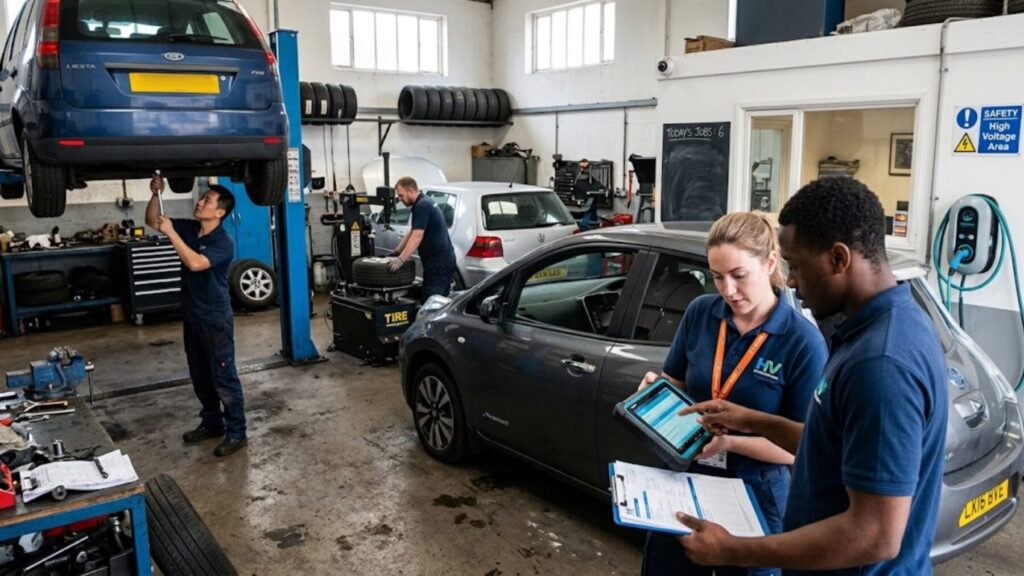
Independent workshops often operate with smaller technical teams. When a single qualified EV technician leaves the impact can be immediate. Service capacity may reduce quickly and existing staff may need to adjust workloads to maintain productivity.
Dedicated recruitment departments are less common within smaller businesses. Hiring decisions are often managed alongside daily operational responsibilities. This can reduce visibility of available candidates and slow the recruitment process.
Financial planning also requires careful balance. Investment in training equipment and recruitment must align with current revenue stability. Independent garages frequently manage multiple priorities while maintaining consistent service delivery.
Despite these pressures independent businesses continue to carry a significant proportion of the UK vehicle servicing workload. Their role within the automotive ecosystem remains essential. Ensuring access to qualified EV technicians supports continuity of service across both urban and regional markets.
6. Common misconceptions holding independents back
One common belief is that EV technicians are only interested in working for large organisations. In reality many technicians value the technical variety autonomy and close team environments often found within independent workshops. Exposure to diverse vehicle types can support broader technical development.
Another assumption is that EV qualified talent is financially out of reach. While salary expectations reflect specialist capability the absence of EV expertise may also influence long term revenue potential. Workshops without EV capability may miss opportunities to expand service offerings as vehicle technology changes.
Some businesses view EV capability as a future requirement rather than a current priority. However the number of electric vehicles entering the servicing cycle continues to increase. Planning ahead allows businesses to manage workforce development without urgency driven decisions.
Recognising these misconceptions can support more balanced workforce planning and encourage earlier engagement with EV recruitment strategies.
7. What independent garages can do differently
7.1 Rethink the offer not just the salary
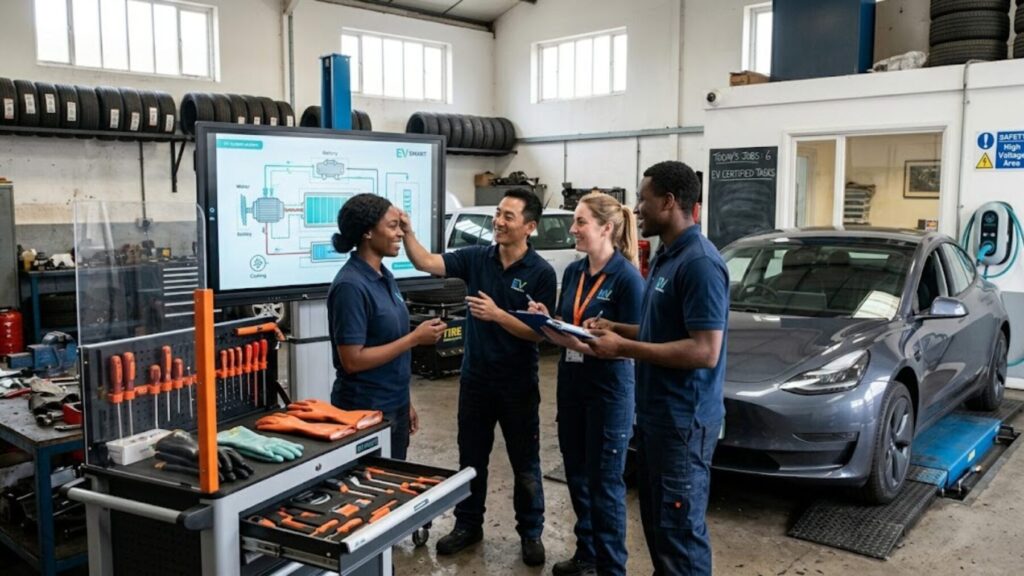
Technicians often consider working environment development opportunities and technical exposure alongside salary. Independent workshops can emphasise structured progression plans, commitment to safe EV ready facilities and supportive team culture. Demonstrating long term intent can improve candidate confidence.
7.2 Build long term talent pipelines
Combining experienced EV technicians with developing team members supports knowledge sharing across IMI levels. Structured workforce planning helps maintain continuity while supporting progression from Level 2 awareness through to Level 3 repair capability and Level 4 diagnostics.
Partnerships with recognised training providers can also support ongoing development while maintaining operational stability.
7.3 Stop competing like big brands
Independent garages often provide varied technical challenges, exposure to multiple vehicle platforms and closer collaboration across teams. These factors can appeal to technicians seeking practical experience across a broad range of EV systems.
Highlighting these strengths allows independent businesses to differentiate their working environment without attempting to replicate large corporate structures.
8. The role of specialist EV recruitment
Recruiting EV technicians requires understanding the differences between IMI Level 2 Level 3 and Level 4 competencies. Generalist recruitment approaches may not fully assess technical readiness for high voltage environments or diagnostic responsibilities.
Specialist EV recruitment focuses on identifying technicians with verified qualifications and practical experience aligned with workshop requirements. Pre-vetted candidates reduce uncertainty and support confident hiring decisions.
Strategic recruitment planning can support long term workforce stability rather than reactive vacancy filling. Access to niche EV talent networks improves the likelihood of identifying technicians suited to independent workshop environments.
Working with a recruitment partner focused exclusively on EV technicians helps align capability with safety standards compliance requirements and future workforce planning objectives.
9. Looking ahead: The next 5 to 10 years for independent garages
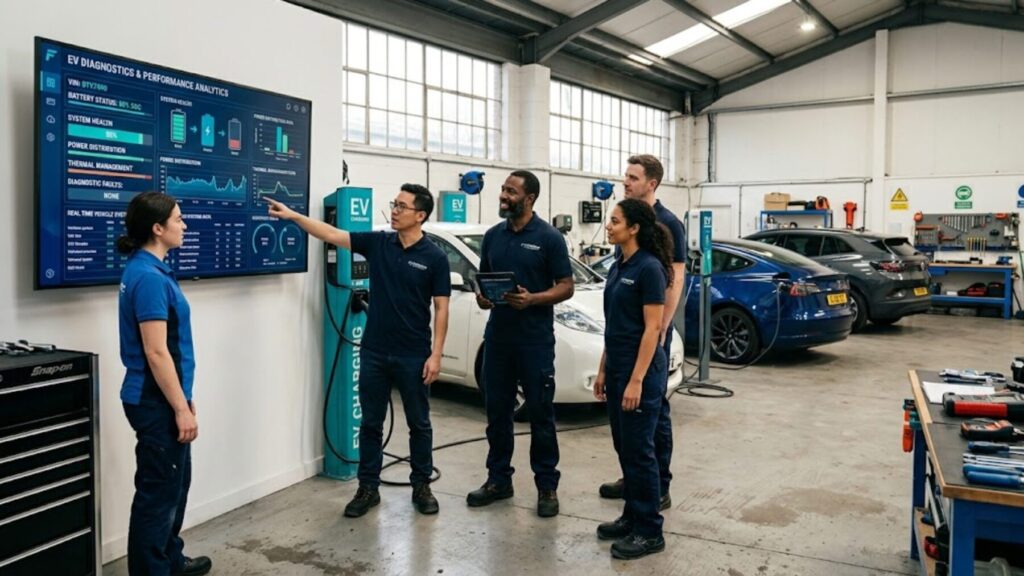
EV servicing demand is expected to continue increasing as more electric vehicles enter daily use. Independent workshops that establish EV capability early may strengthen customer relationships and maintain relevance within a changing automotive landscape.
Technician capability will become as important as diagnostic equipment. Businesses that invest in structured workforce planning can build teams prepared to manage evolving vehicle technologies.
Delaying EV workforce development may increase future hiring pressure as competition for qualified technicians continues. Early preparation supports stability and reduces reactive decision making.
10. Conclusion: Adaptation is possible but it starts with people
The transition to electric vehicles represents a workforce challenge as much as a technical one. Access to IMI qualified technicians influences service capability, operational confidence and long term business resilience.
Independent garages, independent dealerships and EV service providers do not need to approach this transition alone. Structured recruitment combined with targeted development supports balanced workforce capability aligned with evolving industry requirements.
Adapting to EV servicing demand is achievable when workforce planning becomes a strategic priority. Building technician capability today helps ensure independent workshops remain prepared for the vehicles entering the market tomorrow.