
RECRUITING TECHNICIANS FOR HYBRID & ELECTRIC VEHICLE WORK: WHAT SHOULD EMPLOYERS ACTUALLY BE LOOKING FOR?

1. The UK automotive workforce is changing
And the recruitment conversation is changing with it
The UK automotive aftermarket is adapting to a changing vehicle parc. Battery-electric cars have reached almost 1.8 million on UK roads, while plug-in vehicles accounted for 34.5% of new car registrations in 2025. Yet petrol and diesel cars still account for close to 88% of cars in use. The average car is now 9.7 years old.
Workshops are operating in a genuinely mixed environment: conventional ICE vehicles alongside mild hybrids, full hybrids, plug-in hybrids and battery electric vehicles. IMI data shows growing demand for technicians and more vacancies asking for EV experience. An EV qualification matters, but so does practical experience and wider workshop skills. The question facing employers is: when hiring across this changing vehicle mix, what should you actually be looking for?
2. “Hybrid and electric” is not one single category
Why the label on a CV tells you less than you think
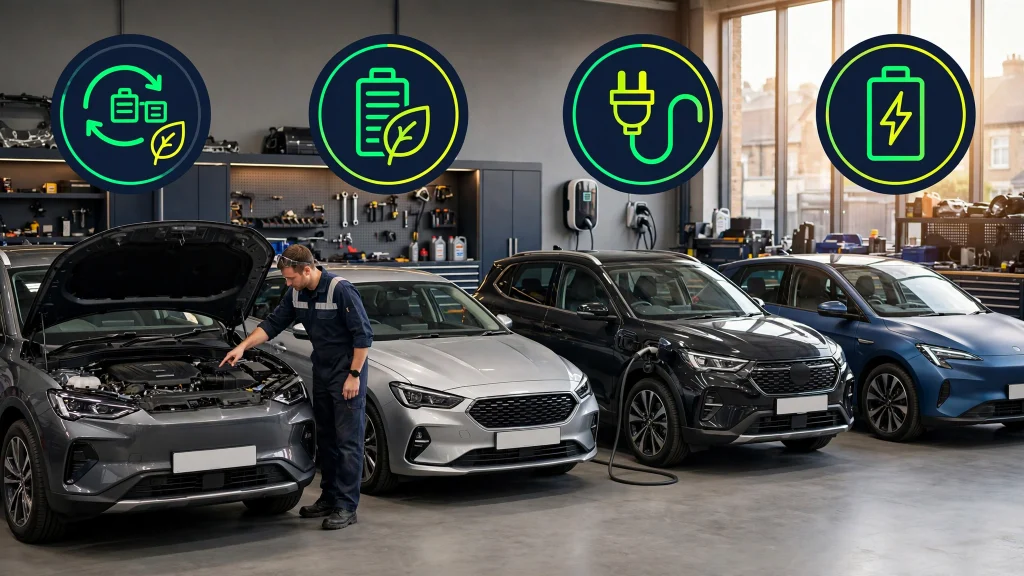
“Hybrid and electric” is a useful shorthand, but it covers different vehicle types. A mild hybrid electric vehicle (MHEV) uses an electric motor to assist the combustion engine but cannot normally drive on electric power alone. A full hybrid (HEV) combines a combustion engine with an electric motor and can drive on electric power alone for limited periods. A plug-in hybrid (PHEV) has a larger battery that can be charged from an external power supply, allowing it to cover some journeys using electric power alone. A battery electric vehicle (BEV) has no combustion engine and runs entirely on its battery and electric motor.
This matters when you recruit. A candidate who says they have hybrid and EV experience may have serviced MHEVs for years or worked on high-voltage components in BEVs. Those are different types and levels of work, yet a job title on a CV rarely tells you which experience the candidate has. Before assessing any candidate, be clear about which vehicles and systems your workshop encounters. The label is only useful when you know what sits behind it.
3. Why EV qualifications matter, but should not end the conversation
The difference between a certificate and a competent technician
IMI EV qualifications provide a recognised benchmark of knowledge and skills assessed at a defined level. For employers, that assurance matters and should not be understated. The IMI qualification pathway covers different levels of EV work. Level 2 focuses on high-voltage hazards, safe working procedures and the isolation and reinstatement needed for routine maintenance. Level 3 extends this to diagnostic, testing and repair activities, including the removal and replacement of high-voltage components. Level 4 covers more advanced diagnosis, testing and repair of high-voltage vehicle systems and components, including work on live high-voltage electrical components. Employers should match the qualification level to the actual work required and verify the candidate’s practical experience.
But a qualification tells you what someone has learned and been assessed on, not what they have done with that knowledge in a working workshop. There is a meaningful difference between a technician who qualified last month with limited opportunity to apply it and one who qualified years ago and has worked regularly on hybrid and electric vehicles since. The qualification opens the door. The questions you ask next tell you what is behind it: what EV work have they carried out, how frequently, on which systems and how independently?
[The IMI’s Q4 2025 EV TechSafe Technician Forecast recorded 74,734 technicians with an EV qualification, representing around 35% of the UK technician workforce. Qualification levels and practical experience behind those certificates vary. Understanding the difference matters for every hiring decision. Source: IMI EV TechSafe Technician Forecast, Q4 2025, June 2026 update.]
4. Practical high-voltage experience is becoming increasingly valuable
What regular HV work actually develops in a technician
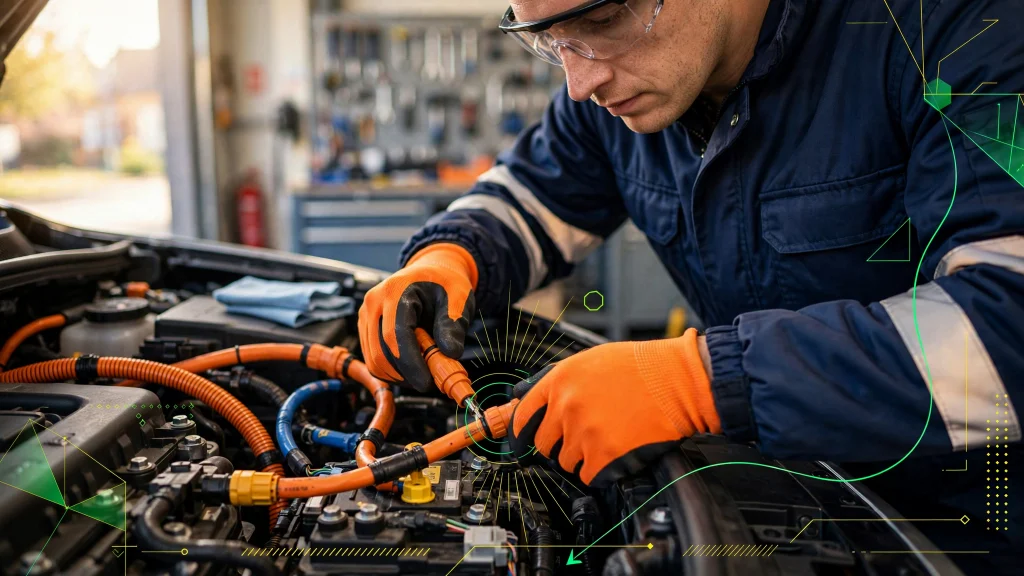
There is a significant difference between holding an EV qualification and applying it regularly in a live workshop. Practical experience gives technicians opportunities to apply safe working procedures, investigate faults and work with different vehicle systems. Experience with real diagnostic problems can also help them develop a more systematic approach to fault-finding. However, the depth of that experience depends on the tasks performed, the vehicles encountered and the level of responsibility involved. High-voltage work requires technicians to follow the appropriate safety procedures and recognise the limits of their competence.
When a CV mentions high-voltage experience, find out what that actually involved: safe isolation and reinstatement, diagnostics and fault-finding, exposure to battery systems, the types of vehicles handled, how frequently the work came up and how independently the candidate worked. Not every workshop needs the same depth of capability. A garage offering routine EV maintenance has different requirements from one carrying out complex fault diagnosis or high-voltage component repairs. Defining the level of capability your workshop needs and assessing candidates
5. Don’t forget the vehicle technician behind the EV qualification
Most working weeks still include plenty of conventional work
An EV-qualified technician is still a vehicle technician. In most UK workshops, their week will not be filled entirely with battery electric cars. SMMT Motorparc data for 2025 shows that petrol cars accounted for 57.7% and diesel cars for 30.1% of cars in use, close to 88% combined. The average car is now 9.7 years old, while 45.7% of cars are more than 10 years old. Conventional servicing, mechanical repairs and general diagnostics will therefore remain a substantial part of workshop activity.
That is why a candidate’s broader workshop background matters as much as their EV qualification. Mechanical experience, diagnostic ability and general workshop skills all influence how effectively they can contribute to your business. A technician who can service a petrol engine in the morning and diagnose a hybrid system later in the day may be more useful to many independent garages than someone whose experience is restricted to a narrow range of work. Assess the complete technician, not just the qualification on paper.
6. Why multi-skilled technicians matter to independent workshops
Versatility is a commercial asset, not a compromise
The commercial case for a multi-skilled technician in an independent workshop is straightforward. If your workshop handles a mix of petrol, diesel, hybrid and electric vehicles, a technician who can contribute across those categories gives you greater flexibility when allocating jobs. A specialist whose skills match only a small proportion of incoming work may leave gaps in workshop capacity.
A multi-skilled, EV-qualified vehicle technician combines all-round workshop capability with recognised EV qualifications and relevant practical high-voltage experience. Depending on their competence and qualification level, they may contribute to conventional servicing, hybrid maintenance, general diagnostics and appropriate EV work. This allows them to support existing revenue while helping the business develop its EV capability.
You are not necessarily employing someone to work exclusively on electric vehicles. You are employing a vehicle technician with additional EV capability. One distinction matters: multi-skilled does not mean qualified or competent to undertake every task. Employers must still match each job to the technician’s training, experience, authorisation and the workshop’s safety procedures.
7. Recruitment should start with the capability your workshop actually needs

Clarity before advertising saves time and leads to better hires
Some employers begin with a general requirement for an EV technician without defining what that means for their workshop. The result can be a vacancy that attracts unsuitable candidates or sets expectations that do not match the work available. A better starting point is to identify the jobs the new technician will actually be expected to undertake.
What proportion of the workload involves hybrid or battery electric vehicles? What level of high-voltage work is required? Is advanced diagnosis needed immediately or might it become important over the next few years? Which conventional mechanical and diagnostic skills must the candidate already possess?
Occasional hybrid servicing requires a different skill set from regular high-voltage diagnosis and component replacement. Once the requirements are clear, divide them into three groups: essential from day one, desirable, and skills that could be developed through further training. Assess practical experience, the ability to work independently and any additional support the candidate may need. Effective recruitment is not about finding someone who ticks every possible box. It is about identifying the capabilities that genuinely matter for the role.
8. Salary and package must reflect the technician you are looking for
Benchmarking matters more as the specification narrows
If you want a technician who combines broad workshop capability with recognised EV qualifications, practical high-voltage experience and strong diagnostic skills, you need to define the role and benchmark its pay carefully. Salary expectations can vary with experience, qualification level, location, responsibilities and the complexity of the work. Employers should compare similar local vacancies rather than rely on a single national average.
The full employment package matters too. Overtime arrangements, working hours, training opportunities, career progression, benefits and the quality of workshop equipment can all influence whether a candidate considers a move. A clear job description and a credible development path can help distinguish one opportunity from another.
Industry labour-rate guides suggest that some garages charge around £80 to £130 per hour for EV work, although actual rates vary by location, garage type and service. These customer labour rates should not be treated as a direct measure of technician salaries or guaranteed profitability. The business case for a hire depends on suitable customer demand, equipment, safe working procedures, productive use of workshop time and the cost of delivering the work. Employers should build their recruitment offer around realistic business requirements and current local market conditions.
9. Recruit for capability, not just the label
A framework worth returning to with every hire
The future of EV recruitment in the UK is not simply about finding technicians with certificates. The IMI’s Q4 2025 EV TechSafe Technician Forecast recorded 74,734 technicians with an EV qualification, representing around 35% of the UK technician workforce. Its forecasts suggest that this number could reach around 137,000 by 2032 and 193,000 by 2035. However, projected demand could exceed supply by more than 43,000 technicians by 2035. These are forecasts based on current trends, not guaranteed outcomes.
For employers, the practical question is how to identify technicians who can meet the needs of their workshop. A strong candidate may combine recognised qualifications with regular practical EV experience, broader skills across conventional and hybrid vehicles, diagnostic ability and a methodical approach to safety. The balance will depend on the role, the vehicles the garage services and the level of work it intends to undertake.
Qualification. Practical experience. Wider workshop capability. Together, these provide a more useful basis for recruitment than a certificate alone. Define the work, assess the person behind the qualification and recruit for the capabilities your workshop needs now, while planning for what it may need next.
Sources: IMI TechSafe EV Technician Forecast June 2026, SMMT Motorparc 2025, SMMT new car registrations 2025, IMI EV qualification framework, Glassdoor UK EV Technician salary data, cargarages.co.uk 2026. IMI shortfall projections are based on current trends and should be treated as indicative forecasts rather than certainties. All figures verified at time of publication.