Reduce downtime and safely expand your EV capability.
Introduction
The rise of electric vehicles (EVs) is transforming the UK automotive and service market at a pace none of us can afford to ignore. For independent garages, dealerships, and dedicated EV service providers, this presents both a massive commercial opportunity and a significant operational challenge. While EVs promise lucrative new revenue streams, they demand specialised knowledge, high-voltage safety expertise, and a thoroughly vetted, technically competent workforce.
Downtime, the non-productive time a vehicle spends sitting idle in your workshop, is costly. When caused by unqualified staff attempting complex repairs, incomplete diagnostics, or a sheer lack of the correct high-voltage tools, the cost escalates dramatically. It affects your profitability, damages your reputation, and jeopardises your ability to secure valuable fleet contracts. Expanding your EV capability safely is not just about growing your customer base; it is about maintaining trust, protecting your staff from electrocution hazards, and ensuring operational continuity in this high-voltage environment.
In this article, we will explore precisely how forward-thinking businesses can smartly reduce EV downtime, safely scale their specialised services, and strategically integrate certified mid to senior EV technicians, IMI Level 2-4, to meet the growing demand efficiently.
1. Understanding the EV skills challenge
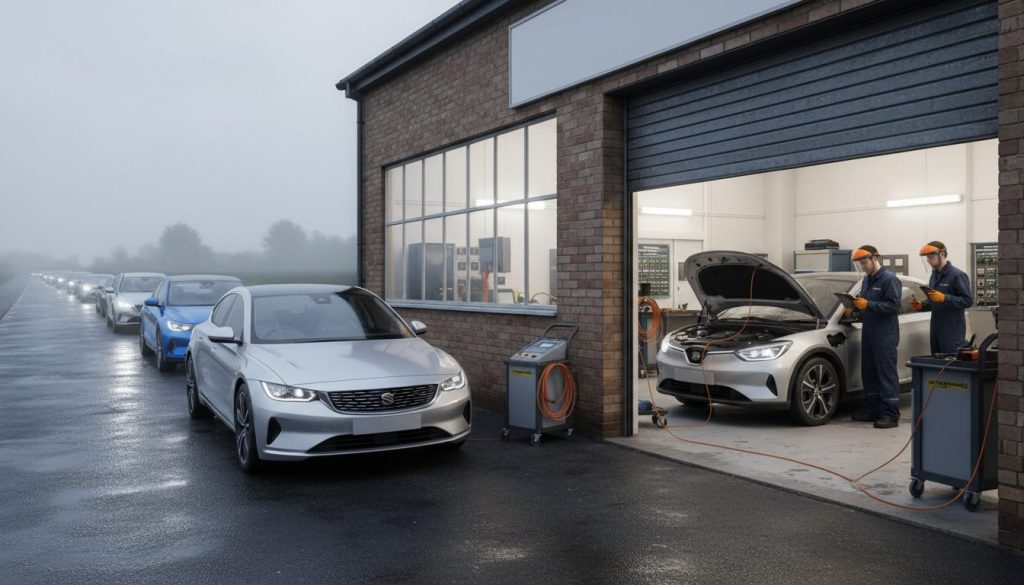
If you are currently experiencing bottlenecks, slow diagnostic times, or the uncomfortable necessity of turning away complex EV work, you are facing the UK’s burgeoning EV skills challenge head-on. Understanding this challenge is the first step toward overcoming it and securing your business’s future.
EV adoption trends: UK sales growth and forecasts
The switch to electric mobility is not a distant future event; it is happening right now on UK roads. Driven by the government’s 2035 phase-out deadline for new petrol and diesel car sales, the market is experiencing sustained, high-volume growth. Every single month, thousands more Battery Electric Vehicles (BEVs) and Plug-in Hybrid Electric Vehicles (PHEVs) hit the road. Current projections, coupled with the Zero Emission Vehicle (ZEV) mandate, mean that your service intake will rapidly see EVs grow from a handful of jobs to a significant portion of your total workload. This irreversible shift means the demand for specialised servicing is already outstripping supply in almost every major region.
The skills gap: Shortage of mid to senior-level EV technicians
The fundamental problem lies in the skills gap, specifically for technicians certified at the IMI Level 2, 3, and 4 tiers. These are the individuals who can safely perform routine maintenance, carry out crucial diagnostic work, and undertake high-level repairs on isolated high-voltage systems. Traditional mechanics simply do not possess this highly specific, high-risk knowledge. This shortage has a direct impact on your business:
- Independent garages: You face severe competition from large dealership networks when trying to attract certified talent, leading to difficulties in scaling your service offering.
- Dealerships: You struggle to maintain efficient throughput, leading to long customer waiting lists and the costly phenomenon of vehicles sitting for days waiting for a qualified pair of hands to start diagnostics.
- EV service providers: Your entire business model relies on this talent, and scarcity forces up recruitment costs and limits expansion potential.
Risks of unpreparedness: Safety, warranty, and customer dissatisfaction
Being unprepared for the EV wave is far more than an inconvenience; it is a profound business risk.
- Safety hazards: The most critical risk is the extreme danger posed by high-voltage batteries, which can run up to 800V. Uncertified staff risk severe injury, electrocution, or even fatal accidents if they fail to follow strict isolation protocols. This exposes your business to massive liability.
- Warranty and liability issues: Incorrect procedures or diagnosis performed by uncertified personnel can instantly void a manufacturer’s warranty on an expensive battery pack or drivetrain component. You could be held financially responsible for a replacement component costing tens of thousands of pounds.
- Slow service times and dissatisfied customers: An inexperienced mechanic will spend days trying to diagnose a complex battery management system (BMS) fault that a Level 4 specialist could pinpoint in hours. Slow, inefficient service leads directly to customer complaints and negative online reviews, damaging your reputation in a market where trust is paramount.
Why downtime matters: Lost revenue and operational bottlenecks
Downtime is a direct, measurable drain on your profitability. When an EV is occupying a service bay for three days instead of one due to a diagnostic backlog, that bay is costing you money. It is stopping you from booking new, high-value jobs, creating a service backlog, and frustrating customers who rely on their vehicles. Having certified EV technicians significantly reduces these risks, guaranteeing a quicker, safer, and more accurate service, and positioning your business for sustainable, profitable growth.
2. The cost of downtime in EV operations
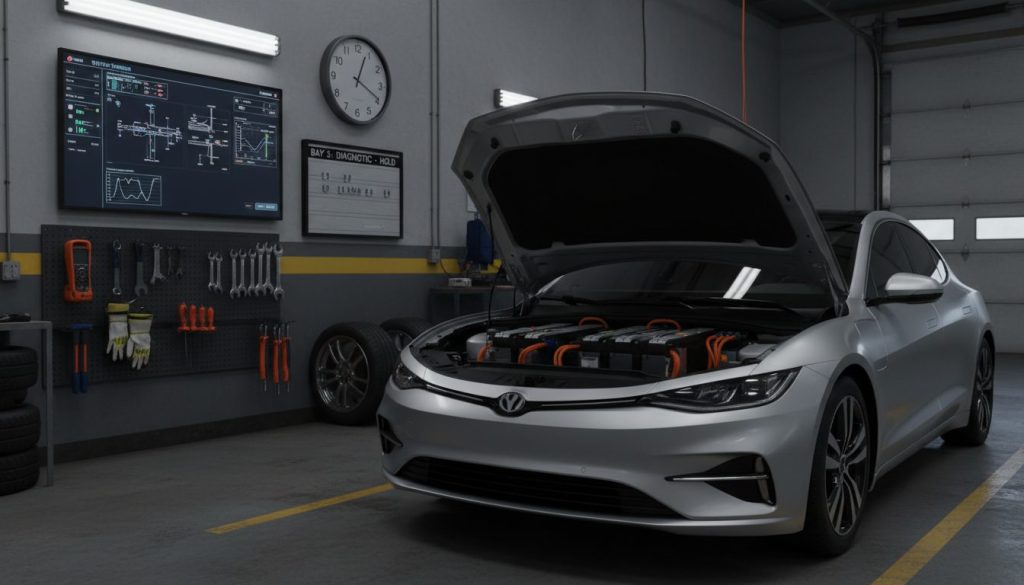
To appreciate the necessity of investing in certified EV talent, you must quantify the devastating cost of operational downtime. In the high-stakes EV service environment, inefficient labour is exponentially more expensive than in the legacy Internal Combustion Engine (ICE) world.
Examples of downtime caused by inadequate preparation
Downtime in EV service often originates from avoidable failures in preparation and knowledge:
- Tooling deficiency: A Level 3 diagnostic job sits for two days because the specific insulated high voltage tool kit required for safe isolation is missing, or the proprietary scan tool software has not been updated.
- Untrained diagnostics: An uncertified technician misinterprets a diagnostic trouble code (DTC) related to battery cell imbalance, leading them to unnecessarily replace a low-voltage component, which fails to fix the issue. The vehicle then sits for another three days waiting for the senior EV specialist to correctly re-diagnose the BMS.
- Inadequate procedures: A battery is scheduled for removal, but the technician is unaware of the specific Original Equipment Manufacturer (OEM) procedure for safe manual handling and hoisting, leading to delays and potential damage to the battery casing.
These scenarios turn a profitable, three-hour job into an expensive, five-day logistical nightmare.
Financial Impact: Lost revenue and missed contracts
Every hour an EV sits in your bay, costing you money, not earning it. Consider the financial impact:
- Lost bay revenue: If your bay rate is £80 per hour, a job that takes 40 hours of downtime, due to waiting for parts, tools, or expertise, represents £3,200 in lost bay capacity alone.
- Missed opportunities: Fleet contracts, particularly for electric vans or taxi services, are highly lucrative but demand extremely fast, reliable turnaround times. A reputation for slow EV service means you instantly lose access to these high-volume contracts, handing them directly to a competitor with certified staff.
- Diagnostic efficiency: Our industry estimates suggest that untrained staff can take an average of 18-24 hours to correctly diagnose a complex drivetrain or BMS fault, including re-diagnosis time. In contrast, an IMI Level 4 certified specialist typically completes the same task in 4-8 hours, thanks to precise knowledge and tool mastery. This difference is the true cost of your downtime.
Reputational impact: Customer dissatisfaction and trust erosion
EV owners are often early adopters, technologically savvy, and value efficiency. A slow or mismanaged repair is a guaranteed source of severe reputational damage:
- Negative online reviews: Frustrated customers will leave highly visible, damaging reviews detailing the excessive downtime and perceived incompetence. These reviews will deter future EV owners who actively search for certified expertise.
- Loss of repeat business: The trust lost from a single major repair error or excessive delay will prevent that customer from ever returning for routine maintenance or future service needs, effectively eliminating their lifetime value to your business.
Safety implications: Liability and catastrophe
The financial penalty for a high-voltage mistake is catastrophic. High-voltage systems must be respected. Your business liability is immense if a technician is injured due to a lack of certification and adherence to safe isolation protocols. The associated legal fees, insurance hikes, and public relations nightmare can easily wipe out years of profit. Safely expanding your EV capability is your best insurance policy against this catastrophe.
3. Key EV capabilities required
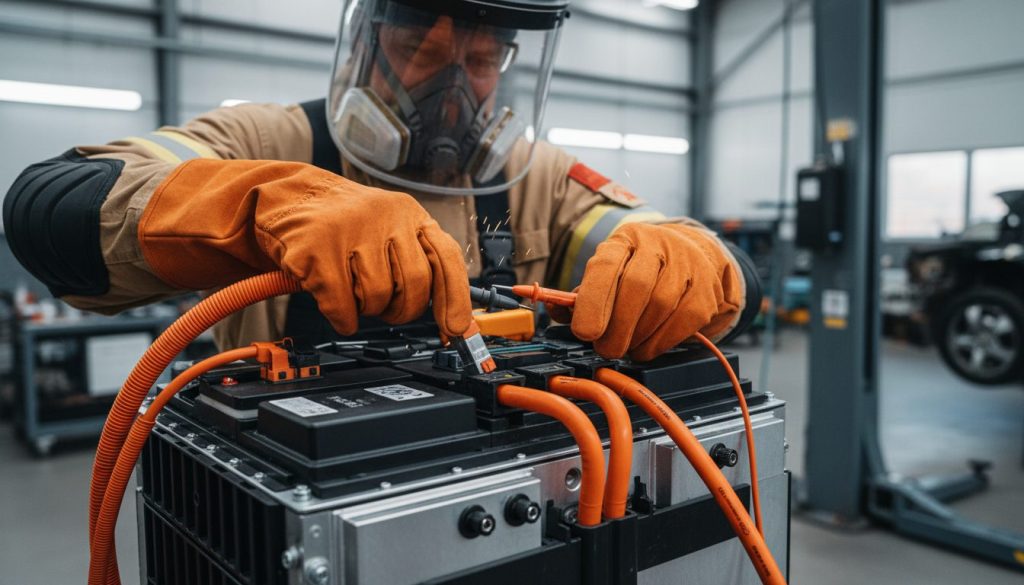
To reduce downtime and maintain safety, your business must look beyond basic mechanical skills and focus exclusively on the specialised, certified capabilities that address the core complexity of EVs. As a leading recruitment partner, we focus on identifying talent with the following critical skill sets.
Technical expertise: Mastering the high-voltage systems
A certified EV technician is, fundamentally, an electrical specialist and systems integrator. You need personnel who are experts in:
- Battery management system (BMS) diagnosis: The BMS controls the battery’s health, temperature, and charging/discharging cycle. Technicians must be able to interrogate the BMS software, identify cell imbalances, and diagnose thermal runaway issues, skills far removed from traditional engine fault finding.
- Hybrid vehicle repairs: This involves understanding the complex integration and switching between the ICE and the high voltage electric motor, which requires dual system expertise.
- In vehicle software updates and calibration: EVs are constantly updated via over-the-air (OTA) software. Technicians must be competent in applying manufacturer updates, flashing modules, and calibrating new components once installed, ensuring all systems communicate post-repair correctly.
Certifications and qualifications: The IMI standard (Level 2–4)
Certification is the verified proof of competence and safety. When recruiting or training, you must target the IMI standard for practical service:
- IMI Level 2 award in EV and hybrid vehicle routine maintenance: This is the practical entry point, certifying staff to safely work around high voltage systems and perform non-electrical routine service jobs. It ensures the technician knows where the hazards are and how to mitigate them during basic maintenance.
- IMI Level 3 award in EV and hybrid vehicle repair and replacement: This is the core qualification for efficient repair. It certifies technicians to safely isolate the high voltage system and perform diagnostics and component replacement on isolated, non-live, high voltage systems, covering the majority of service and repair work that lands in your workshop.
- IMI Level 4 award in EV and hybrid vehicle diagnosis and repair: This is the specialist tier. These master technicians are certified to diagnose the most intricate electrical faults, including those deep within the battery pack, and perform repairs on live high voltage components following extremely strict, advanced isolation and safety protocols. Securing this level of talent instantly unlocks high-value, complex repairs that competitors cannot touch.
Tools and equipment: The safety investment
The right tools are not optional; they are a compliance requirement and a direct investment in efficiency. Downtime often occurs because technicians lack the specific tools to safely complete the isolation procedure.
- Specialised diagnostics: Access to OEM-level or equivalent third-party diagnostic software and scanners is paramount for communicating with the vehicle’s specific high-voltage architecture.
- Insulated high voltage kit: Full sets of insulated tools, rated to 1000V, Category III multi-meters, and appropriate Personal Protective Equipment (PPE), including insulated gloves and face shields, are mandatory.
- Battery handling equipment: Investment in specialised lifting tables, carts, and handling gear is essential for the safe removal and installation of extremely heavy battery packs.
These capabilities are essential because they move your business from guesswork to guaranteed, compliant procedures, directly reducing diagnostic time and avoiding catastrophic, costly mistakes.
4. Strategies to Safely Expand EV Capability
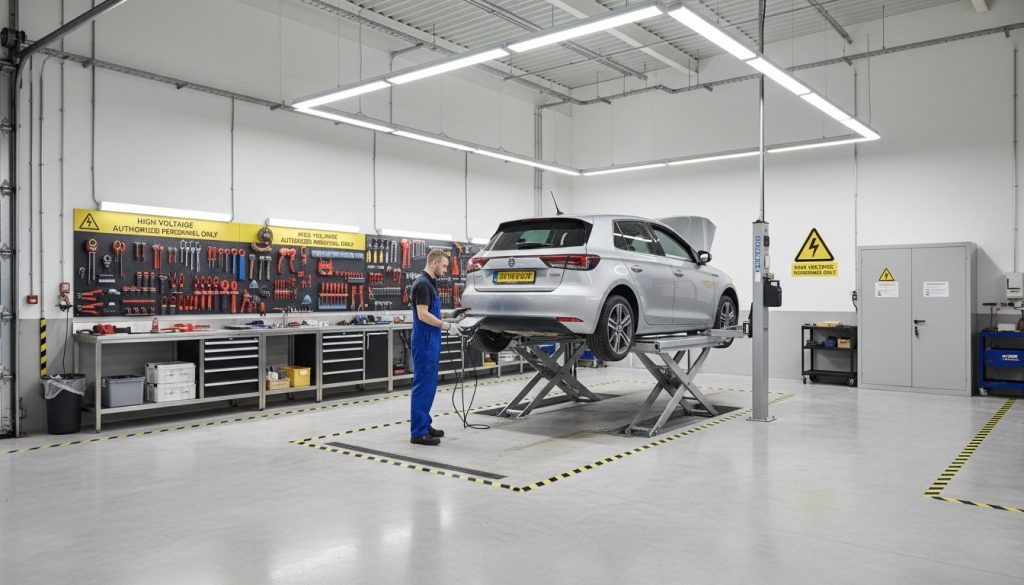
Expanding your service capability is a strategic decision that demands a multi-faceted approach. You cannot simply wait for the market to hand you the talent; you must proactively build the skills and infrastructure your business needs.
Hiring certified EV technicians: The immediate efficiency boost
The fastest way to reduce existing downtime is to bring in certified expertise immediately. Focus your recruitment efforts exclusively on IMI Level 3 and 4 specialists. These technicians act as your internal champions:
- Rapid diagnostics: They can instantly triage complex EV faults, reducing the time a vehicle spends awaiting diagnosis from days to hours.
- Mentorship and training: They become the internal resource who can guide and mentor your existing Level 2 upskillers, propagating best practices and safety culture throughout your workshop.
- Compliance assurance: Their certification immediately gives your business the stamp of authority, ensuring all high-voltage work is compliant with safety regulations.
This is where a specialist recruitment partner provides invaluable access to pre-vetted talent who can start delivering results immediately.
Upskilling existing staff: Building internal capacity
While hiring is crucial, upskilling your reliable existing workforce provides long-term stability and retains institutional knowledge. You should invest in structured training programmes that systematically move your best mechanics up the IMI ladder:
- Targeted progression: Fund immediate progression from Level 2 to Level 3 for your core technicians. This unlocks their ability to perform the majority of day-to-day EV repair work safely and independently.
- OEM-specific courses: Beyond the IMI core, fund attendance at brand-specific training modules. This ensures your staff understand the proprietary systems of the vehicles you see most often in your area, for example, specific battery cooling systems or motor control units.
- Mentoring and shadowing: Pair upskilling Level 2 staff with your new Level 3 and 4 specialist hires. Structured shadowing ensures practical knowledge transfer, reinforces safety protocols, and accelerates competence in a controlled environment.
Optimising workflow: Safe and efficient operations
You must treat EV work as distinct from ICE work in your service bay organisation to prevent cross-contamination of risk and procedure:
- Dedicated EV bay: Designate a specific, clearly marked bay or area. This area must feature clear signage, non-conductive floor mats, and secure storage for insulated tools and safety gear. This physically enforces safety compliance.
- Tooling layout: Ensure all required high-voltage tools are stored within the EV bay and controlled via a lockout system, preventing unqualified staff from using them elsewhere and ensuring they are always available for certified technicians.
- Scheduling: Schedule complex EV diagnostic jobs to minimise disruption. Avoid slotting major EV battery work during peak service times. This focused scheduling allows your specialists the time and space needed for safe isolation procedures, drastically cutting down on unplanned downtime.
Investing in technology: The smart toolkit
Technology investment must be targeted to reduce diagnostic time, which is the leading cause of EV downtime. This means focusing on specialist battery testers that check cell health and accurate diagnostic software subscriptions that give you deep access to the vehicle’s control units. This ensures your team spends less time guessing and more time fixing.
Partnerships: Accessing talent quickly
In today’s highly competitive market, relying solely on local job adverts is a recipe for failure. Partnering with EV-focused recruiters gives you a massive competitive advantage. They already possess the network of certified Level 2–4 technicians, allowing you to access exclusive, pre-vetted talent quickly, significantly reducing your time to hire and immediately solving your critical skills gaps.
5. Benefits of a skilled EV team
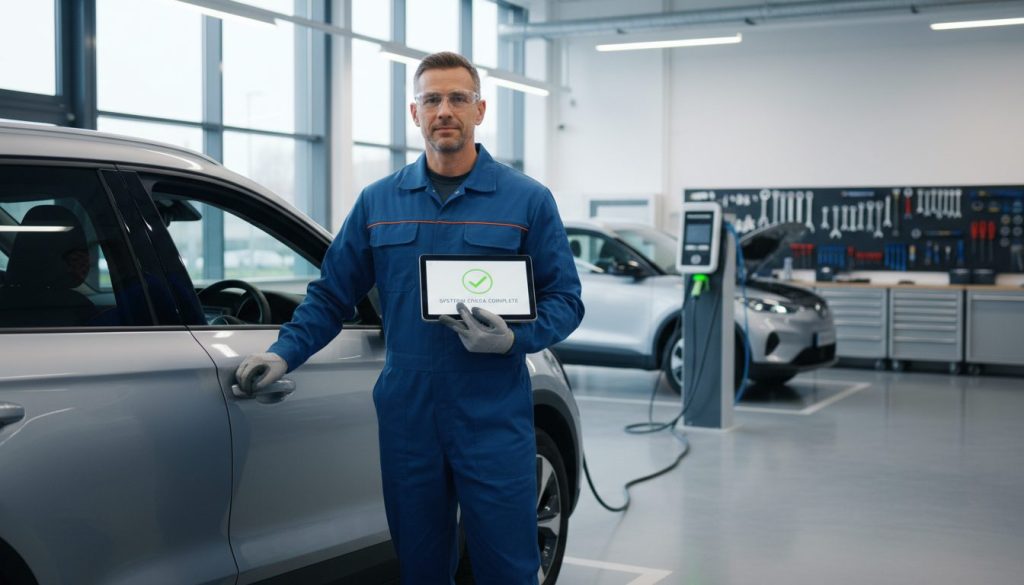
The strategic investment in certified EV technicians delivers benefits that far outweigh the initial costs, transforming your business into an efficient, safe, and highly attractive service destination.
Reduced downtime and faster turnaround
The most direct benefit is the elimination of unnecessary downtime. Certified Level 3 and 4 technicians possess the procedural knowledge to perform safe isolation and the expertise to execute “first time fixes.” This translates directly into:
- Increased utilisation: Service bays are earning revenue instead of sitting idle.
- Predictable service: You can give customers accurate turnaround times, improving trust.
- Faster customer return: Vehicles are returned more quickly, enhancing customer satisfaction.
Mini case study:
A busy dealership in Manchester, facing an average EV diagnostic turnaround of 3.2 days, hired two IMI Level 4 specialists. They implemented a dedicated diagnostic bay and empowered the specialists with the latest software. Within six months, their average complex EV repair turnaround time dropped to 1.1 days. The ability to move vehicles through the bay quickly freed up capacity, allowing them to secure three new local fleet maintenance contracts they previously could not handle. Their certified staff provided measurable competitive value.
Safer working environment for staff
Safety is paramount, and certified staff ensure that your workshop adheres to the strictest high voltage protocols. A skilled EV team:
- Minimises risk: They understand how to perform safe isolation, check for zero potential, and apply lockout procedures, protecting every employee from high voltage incidents.
- Fosters confidence: When staff feel safe and properly trained, morale and productivity improve, further reducing errors.
Increased capacity to take on more EV jobs and fleet contracts
Once your business achieves critical mass with Level 3 and 4 certified technicians, you gain the confidence and capability to market your services aggressively. You can confidently accept high-value, complex repairs that your non-certified competitors must turn away. This is particularly crucial for attracting profitable EV fleet maintenance contracts, which prioritise verified safety and rapid repair capability above all else.
Competitive advantage: Recognised EV expertise
In a market saturated with general mechanics, certification is your key differentiator. Being recognised as a dealership or independent service provider with certified, high-level EV expertise provides a significant competitive edge:
- Marketing power: You can proudly market your IMI-certified status and specialist capabilities, attracting the growing demographic of safety and quality-conscious EV owners.
- Premium positioning: You can justify premium labour rates for specialised diagnostic and repair work, knowing that your certified staff deliver superior value and safety.
A skilled EV team transforms your business from a general repairer into a sought-after high-voltage specialist.
6. Practical steps for implementation
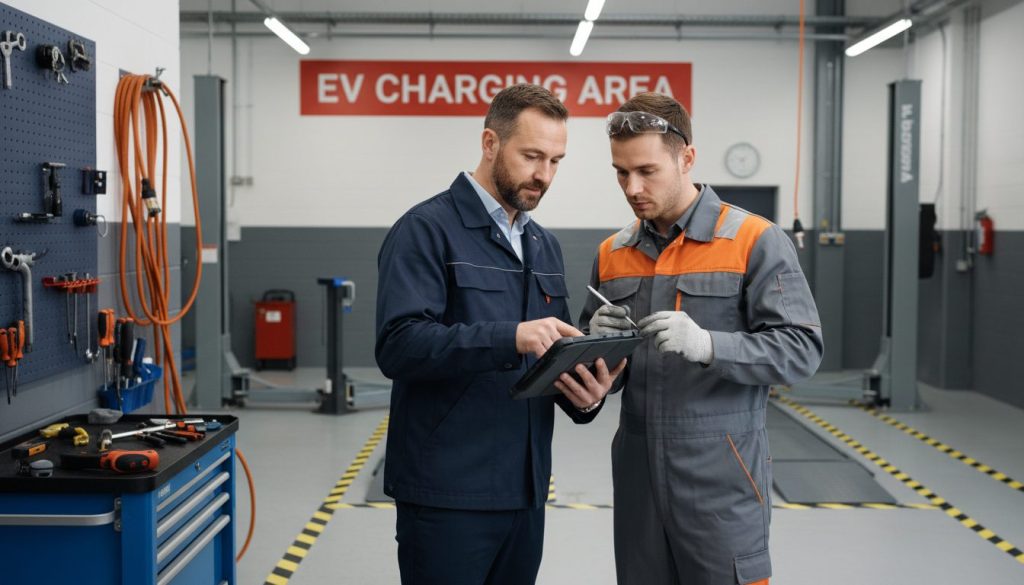
Transitioning your business to safely and efficiently handle EV service requires a clear, phased implementation plan. You must execute these steps deliberately to avoid disruption and maximise your return on investment.
Assess current EV workload and identify gaps
The process begins with an honest audit of your current capabilities and workload:
- Workload review: Track how many EV or Hybrid vehicles you see, the type of work performed, for example, simple maintenance versus complex diagnostics, and, crucially, how long they currently sit in the bay, downtime.
- Skills audit: Identify which of your existing staff are already Level 2 certified and who are candidates for Level 3 upskilling. Pinpoint the IMI Level 4 knowledge gap that needs to be filled externally.
- Tooling and infrastructure check: Inventory your high-voltage insulated tools, diagnostic software subscriptions, and safety equipment. Identify immediate shortages that could cause downtime.
Recruit or train mid to senior EV technicians
Based on your audit, immediately move to acquire the necessary talent:
- External recruitment (Level 4): Prioritise hiring at least one IMI Level 4 Master Technician to lead complex diagnostics and act as your internal authority. Utilise specialist recruiters to speed up this process.
- Internal upskilling (Level 2 to Level 3): Select two to three experienced, reliable mechanics and enroll them immediately in IMI Level 3 training. This ensures you are growing internal, loyal expertise.
Update safety protocols and ensure Staff understanding
Before the new talent arrives or training is complete, you must formalise your high-voltage safety procedures:
- Mandatory protocol document: Create a clear, easily accessible high voltage safety document covering isolation, lock out/tag out (LOTO) procedures, and emergency contact protocols.
- All staff briefing: Ensure every single employee, from the valet to the service manager, understands the distinction between ICE and EV bays, the location of the emergency shutdown, and the high voltage risk associated with Level 1 awareness.
- Safety drill: Conduct a live, high-voltage safety drill using a decommissioned EV battery or component to ensure real-world readiness.
Schedule a phased rollout to integrate EV capabilities
Do not try to switch your entire business overnight. A phased approach minimises risk and disruption:
- Phase 1, preparation: Complete all training enrolment, purchase the necessary high voltage tools, and establish the dedicated EV service bay.
- Phase 2, integration: Introduce the Level 4 specialist. Start by only accepting basic Level 2 and Level 3 work, allowing the new specialist to validate your safety procedures and train the Level 3 upskillers.
- Phase 3, expansion: Once procedures are robust and staff are certified, actively market your expanded EV diagnostic and repair capabilities and begin targeting fleet customers.
Monitor Performance: Downtime Metrics and Efficiency
Measure the success of your implementation by monitoring key performance indicators (KPIs) relevant to EV operations:
- Track EV turnaround time, from check-in to completion. Your goal should be to match or beat ICE service times.
- Monitor “first time fix” rates for EV diagnostics. High rates indicate the quality of expertise.
- Record customer feedback specifically related to EV service satisfaction.
7. The long-term advantage
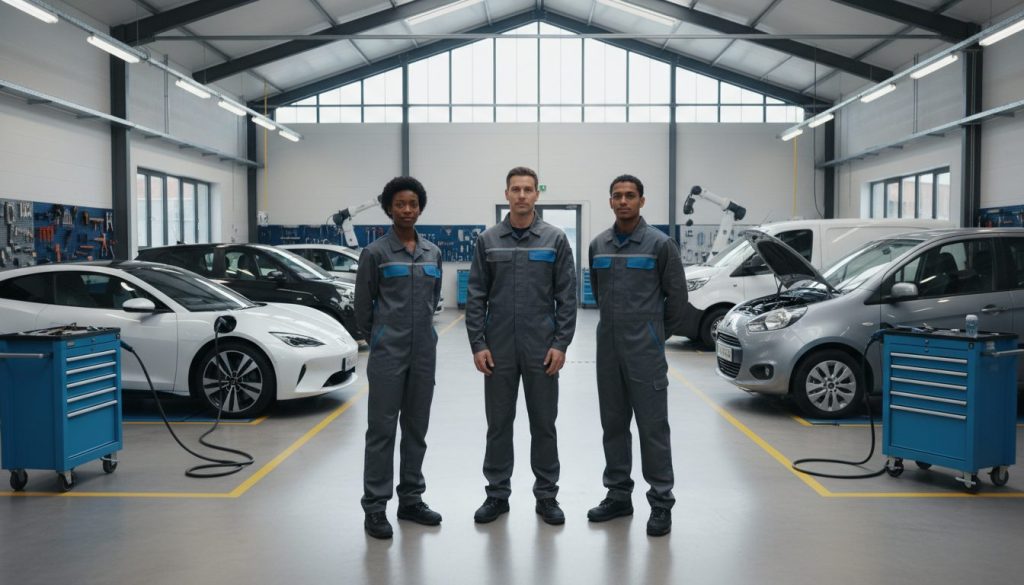
The most profound impact of investing in certified EV talent is the long-term, strategic advantage it secures for your business. You are not just solving a skills shortage; you are fundamentally future-proofing your business model.
Future-proofing the business
As EV adoption rates continue to climb, your reliance on high-quality, certified EV service will become absolute. By establishing this expertise now, you ensure that your revenue streams remain robust and relevant for the next two decades. Conversely, businesses that cling solely to ICE maintenance will face a slow, inevitable decline in profitability and relevance. You are choosing to lead the market, not follow it.
Building a reputation for reliability, safety, and technical excellence
Your reputation is your most valuable asset. Investing in certified IMI Level 3 and 4 talent is the clearest signal you can send to the market:
- Reliability: Faster turnaround times and first-time fixes build a reputation for technical excellence.
- Safety: Your rigorous safety protocols, backed by certified staff, will be noted by sophisticated fleet managers and private owners alike.
This reputation builds a powerful, positive word-of-mouth effect, creating a competitive moat around your business that uncertified competitors cannot cross.
Expanding market share in the EV service ecosystem
A highly skilled EV team allows your business to actively expand its market share in new, high-growth areas. This includes securing lucrative long term maintenance contracts with local electric taxi fleets, delivery companies, and corporate vehicle pools, all of whom demand certified expertise. You will effectively pivot your business to capture the highest value segment of the modern automotive market.
Continuous improvement: Staying up to date
The electric future demands a commitment to continuous improvement. Once you have secured your certified talent, you must maintain your edge through ongoing education. This means allocating an annual budget for refresher courses, new OEM certification modules, and advanced diagnostic software training. Your long-term success hinges on your ability to not only acquire the talent but to keep that talent at the very forefront of evolving EV technology.
Conclusion and call to action
Reducing downtime and safely expanding your EV capability is no longer optional; it is the single most critical strategic imperative for independent garages, dealerships, and EV service providers in the UK. Certified EV technicians, proper high voltage tools, and well-designed workflows are the foundation that allows you to deliver high-quality, compliant service, maximise revenue, and maintain impeccable safety standards.
The cost of delay is exponentially higher than the cost of investment. Every day you wait is a day your competitors are capturing your potential EV revenue and establishing a dominant reputation.
⚡ Act now: Invest in mid to senior certified EV talent, IMI Level 2–4, implement rigorous safety protocols, and commit to continuous technical excellence before your competitors capture the growing EV service market. With the right people and processes in place, your business will thrive in the electric future.