
You need an EV technician. So does every other garage in the UK. Here is how to actually find one.
1. The hiring problem nobody warned you about
Why finding an EV technician is harder than it looks
Imagine you are a garage owner. You have just invested in a new EV diagnostic bay. Your existing customers are starting to ask about EV servicing. The work is there, the equipment is there, but one thing is missing: a technician appropriately qualified to carry out EV work safely. You post a job advert and wait. A week passes. Then two. A handful of applications arrive. You open them one by one. Most hold no EV qualification at all. The one candidate who does is already fielding three other offers.
This is not a hypothetical. It is the pattern that independent garages across the UK are describing right now. The Motor Ombudsman’s January 2026 survey confirmed that 45% of UK vehicle repairers expect recruitment of qualified technicians to remain difficult this year, with EV-specific roles sitting at the sharpest end of that problem. IMI TechSafe data from Q3 2025 confirmed that only 26% of the UK technician workforce holds any EV qualification. With almost 500,000 new battery electric vehicles registered in 2025 and used EV transactions rising 45.7% to a record 274,815 in the same year, the pressure on workshops is growing at a pace the available talent pool cannot match.
2. Know what you are actually hiring for
EV qualifications are not all the same thing
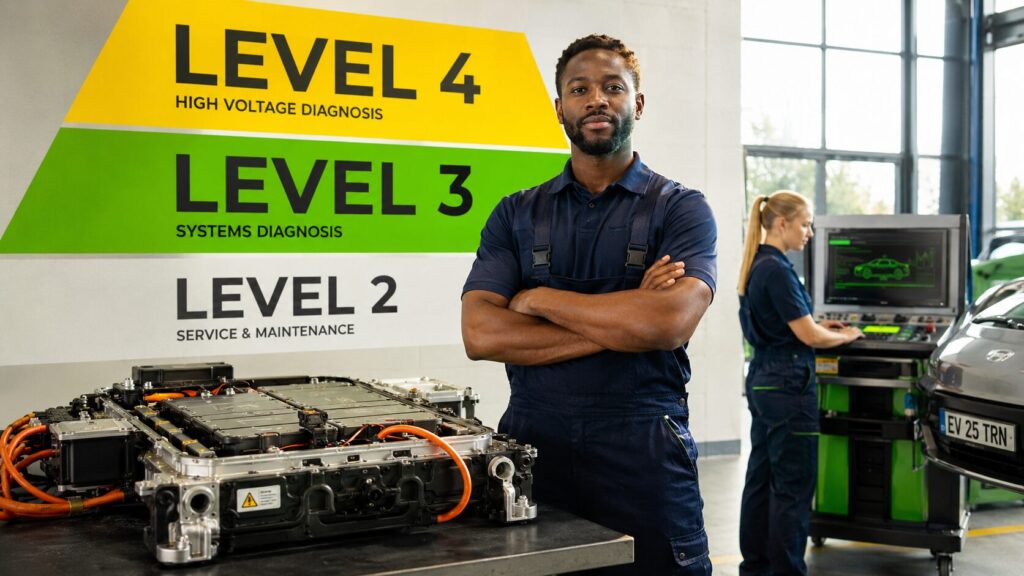
Before you write your first job advert, be clear about exactly what level of EV capability your workshop requires. This matters more in EV recruitment than in almost any other area of the motor trade, because the IMI qualification framework creates genuine and significant differences between what technicians at each level are permitted to do.
A technician holding an IMI Level 2 EV qualification can carry out routine maintenance and inspections on electric and hybrid vehicles. They cannot work on live high-voltage systems. A Level 3 technician can diagnose faults and replace high-voltage components but still requires the vehicle to be de-energised first. An IMI Level 4 technician is trained and assessed to carry out advanced live high-voltage work, including complex fault diagnosis, advanced battery diagnostics and module-level procedures where live high-voltage systems are involved.
If your workshop plans to offer general EV servicing, a Level 2 or Level 3 technician may serve your needs well. If you want to offer advanced diagnostics or battery repair, you need Level 4. Be specific in your advert. Advertising for an EV technician without specifying the level will attract applications from across the qualification spectrum and make shortlisting significantly harder.
Only 26% of UK technicians hold any EV qualification. Of those, Level 4 certified technicians capable of live high-voltage work represent a considerably smaller group. Knowing exactly which level you need before you advertise will save significant time in the hiring process. Source: IMI TechSafe Q3 2025
3. What EV technicians actually want from a garage
Understanding what motivates the candidates you are competing for
Here is something many garage owners overlook when they start hiring: an experienced IMI Level 3 or Level 4 EV technician in the UK today has options. Dealerships, fast-fit groups, fleet operators and specialist EV workshops are all competing for the same small pool of qualified people. If your offer does not stand up to comparison, you will lose candidates to businesses that have thought more carefully about what the market wants.
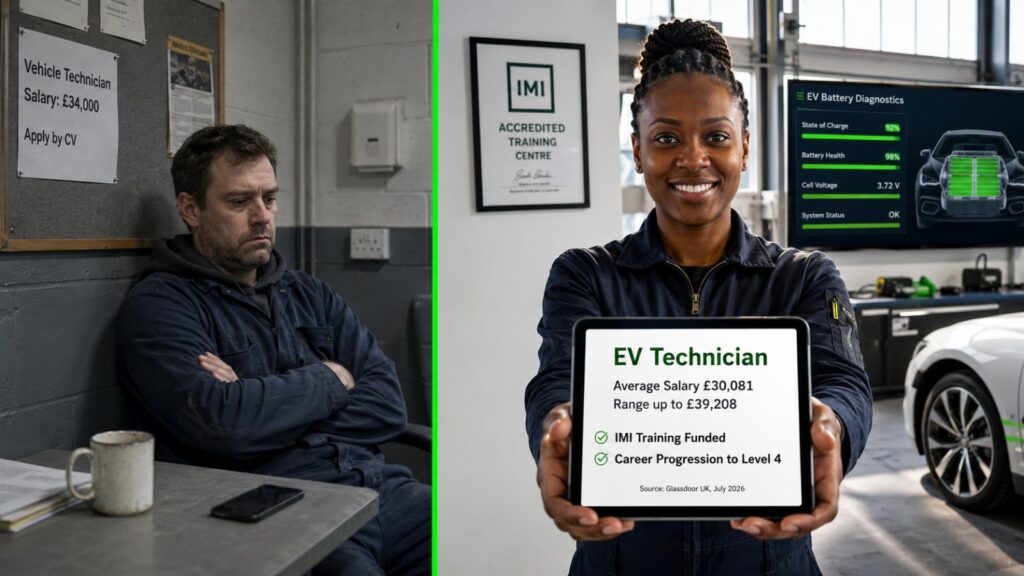
Salary is the most obvious starting point. According to Glassdoor UK, based on more than 14,500 anonymously submitted salaries last updated 21 July 2026, the average salary for an EV Technician in the UK is £30,081 per year, with a typical range of £23,696 to £39,208. Top earners with higher experience and qualification levels reach up to £51,741. EV qualifications and hands-on diagnostic experience are among the factors that push individual packages toward the higher end of that range. If your salary offer is below market rate or not stated upfront in your advert, you are already at a disadvantage. In 2026, salary transparency is not optional. Candidates who cannot see a figure will move on.
(Source: glassdoor.co.uk/Salaries/ev-technician-salary-SRCH_KO0,13.htm)
Beyond pay, EV technicians care about training and progression. They have already invested in their own development and they want an employer who continues to build on it. If your garage is committed to ongoing EV training and growing its capability, say so. That commitment is a genuine competitive advantage where many independents remain vague about their EV future. Working conditions matter equally. EV diagnostics require proper equipment, appropriate PPE and a workshop that takes high-voltage safety seriously. Your environment is part of your hiring offer.
4. Writing a job advert that actually works
The difference between an advert that attracts candidates and one that gets ignored
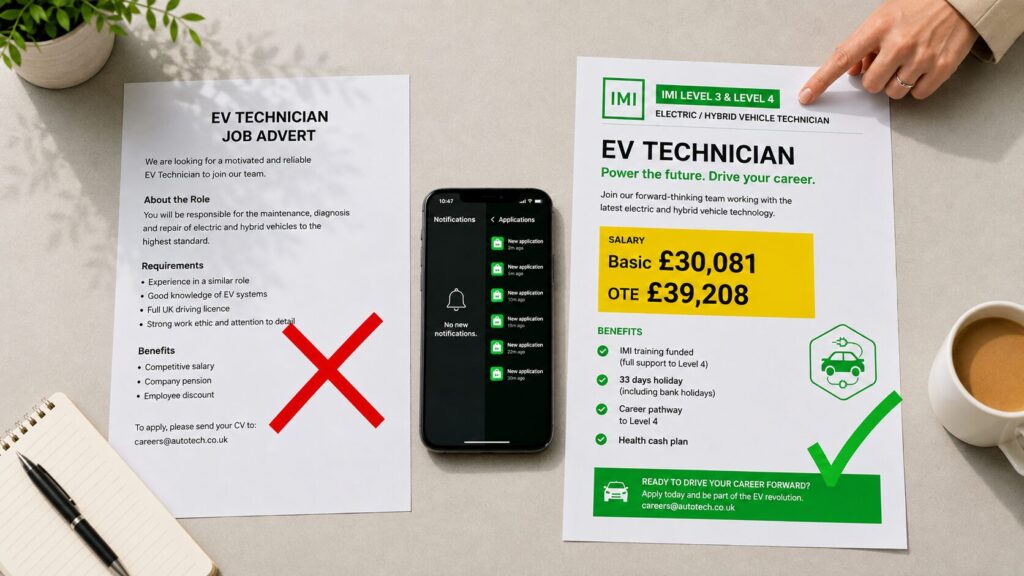
Most EV technician job adverts are written by people who have never recruited for a shortage skill before. They list duties, state a qualification requirement and mention competitive salary. They look identical to dozens of other adverts running simultaneously. A technician scrolling through job boards on a Tuesday evening will not stop for something that tells them nothing distinctive about your garage specifically.
Start your advert with your workshop, not the job. Tell the candidate what kind of business you are and what your EV ambitions look like. If you are investing in new diagnostic equipment, say so. If you are building a dedicated EV bay, mention it. If the successful candidate will have real influence over how your EV offering develops, that is worth saying. These details cost nothing to include and they tell a motivated technician something a generic advert never will.
State the salary. Adverts without salary information consistently generate fewer applications and lose candidates to adverts that are transparent. If your range runs from £38,000 to £44,000 depending on experience, say so. Be specific about the IMI level you require. If you will consider Level 3 candidates working toward Level 4 or are open to sponsoring the next stage of training, say that too. That kind of offer can be the deciding factor for a technician weighing up two similar roles.
5. Where to find EV technicians

The channels that work and the ones that waste your time
General job boards will generate some response for EV technician roles but they are rarely the most effective channel for a shortage skill in a specialist trade. Many experienced EV technicians are already in employment. They are not spending their evenings scrolling through Indeed. They are following industry conversations on LinkedIn, they are part of professional networks and they are likely to hear about your role through a specialist rather than a broad platform.
Specialist motor trade job boards are better targeted than general platforms and reach candidates who are actively engaged with the sector. Some also operate networks of IMI-qualified temporary EV technicians, which can serve as a practical short-term solution while a permanent hire is in progress. LinkedIn is underused by independent garages for technical hiring. A well-written post describing your garage, your EV ambitions and your role will reach people that a job board advert will not, including passive candidates who might move for the right opportunity.
Working with a specialist EV recruitment partner who understands the qualification framework and knows the candidate market is the most direct route to a shortlist of genuinely capable people. Specialist recruiters in this space often have access to candidates who are not actively applying anywhere but who would consider moving for the right role.
6. The commercial case for getting this right
What an EV-capable technician is worth to your business
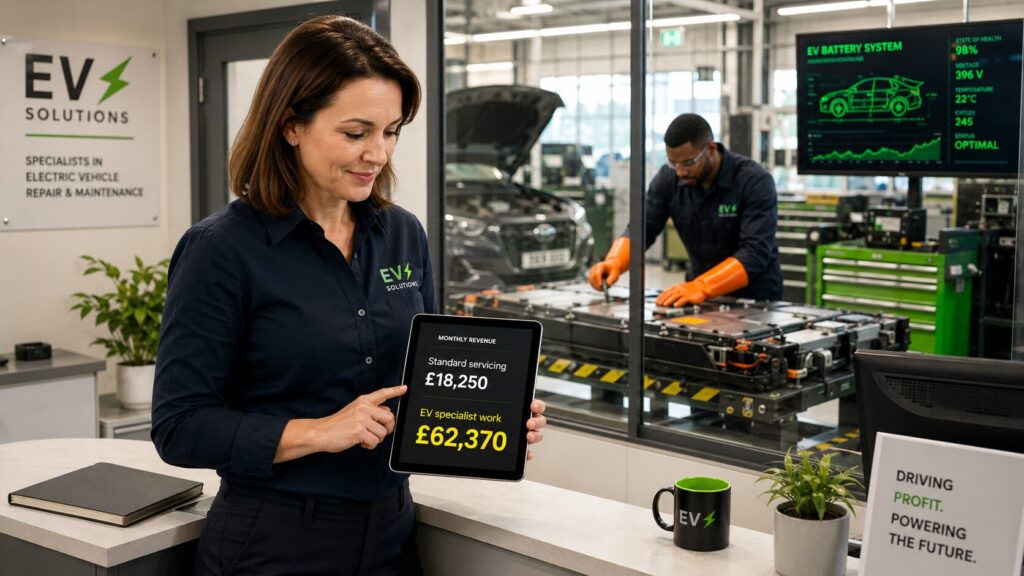
If you are weighing up whether the effort of recruiting an EV technician is justified, the numbers are clear. Industry labour rate guides suggest that specialist EV work can command rates in the region of £80 to £130 per hour, reflecting the additional training, specialist equipment and safety infrastructure required. That is a meaningfully higher rate than conventional servicing and it reflects genuine market demand.
With the used EV market growing sharply and main dealer capacity unable to absorb the full volume of EVs entering private ownership, independent garages that can service electric vehicles are positioned in front of a growing customer base. The IMI forecasts a shortfall of more than 44,000 EV-qualified technicians by 2035. Garages investing in this capability now are positioning themselves to benefit from growing EV demand throughout the coming years.
The cost of not hiring is also worth considering. A garage turning away EV work because it lacks qualified staff is not simply missing individual jobs. It is sending customers to competitors who may retain them long-term. In a market where EV ownership grows every month, the cost of being seen as unable to service these vehicles is considerably higher than the cost of the right hire.
EV labour rates in UK garages currently run between £80 and £130 per hour for electric vehicle work, compared to standard servicing rates. For workshops able to offer this service, the revenue difference is material. Source: cargarages.co.uk 2026
7. Keeping the technician once you have found them
Retention starts on day one
Hiring an EV technician in this market is hard enough. Losing one six months later because the role did not deliver what was promised is avoidable. Retention starts with honesty at the hiring stage. Set accurate expectations about the role, the equipment and the development opportunities available and you give a new hire the best foundation for a long working relationship.
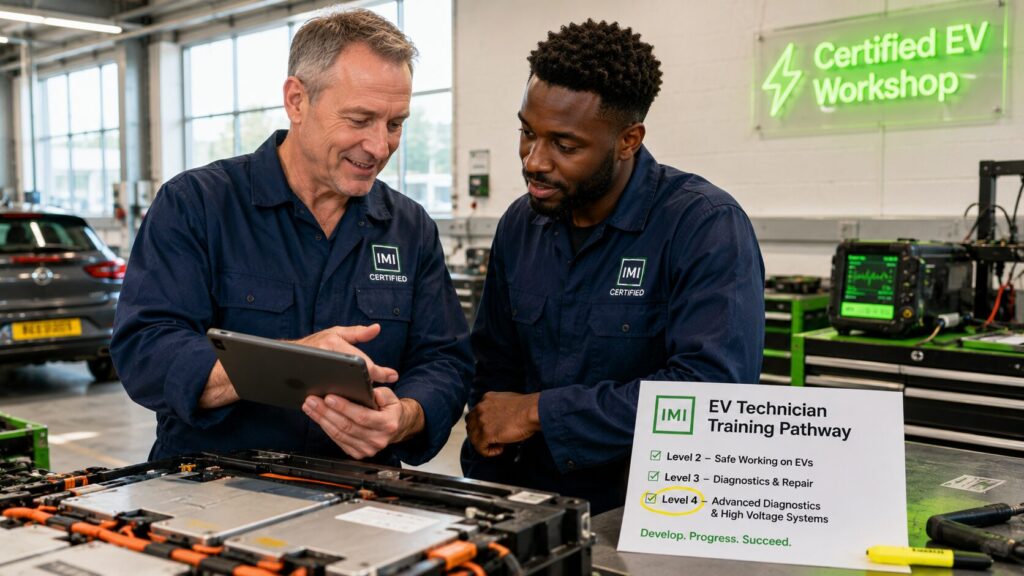
Ongoing training is the most practical retention tool available to independent garages. A technician who sees a clear pathway from Level 2 through to Level 4 within your business, supported by their employer, is significantly less likely to look elsewhere. Sponsoring the next IMI qualification for a technician who has proved themselves is an investment that pays back in loyalty in a market where rehiring is expensive.
Recognition matters too. EV technicians know their skills are scarce and they notice when that is acknowledged. Building a workshop culture that treats EV capability as a valued specialism, rather than simply an expectation, makes a real difference to how long good people stay.
Data sources: Motor Ombudsman Annual Workshop Survey January 2026, IMI TechSafe Q3 2025, Perfect Placement Vehicle Technician Salary Guide 2026, SMMT EV registration data 2025, cargarages.co.uk Labour Rate Guide 2026, Autotech Recruit and Perfect Placement recruitment insight. All figures verified at time of publication.